
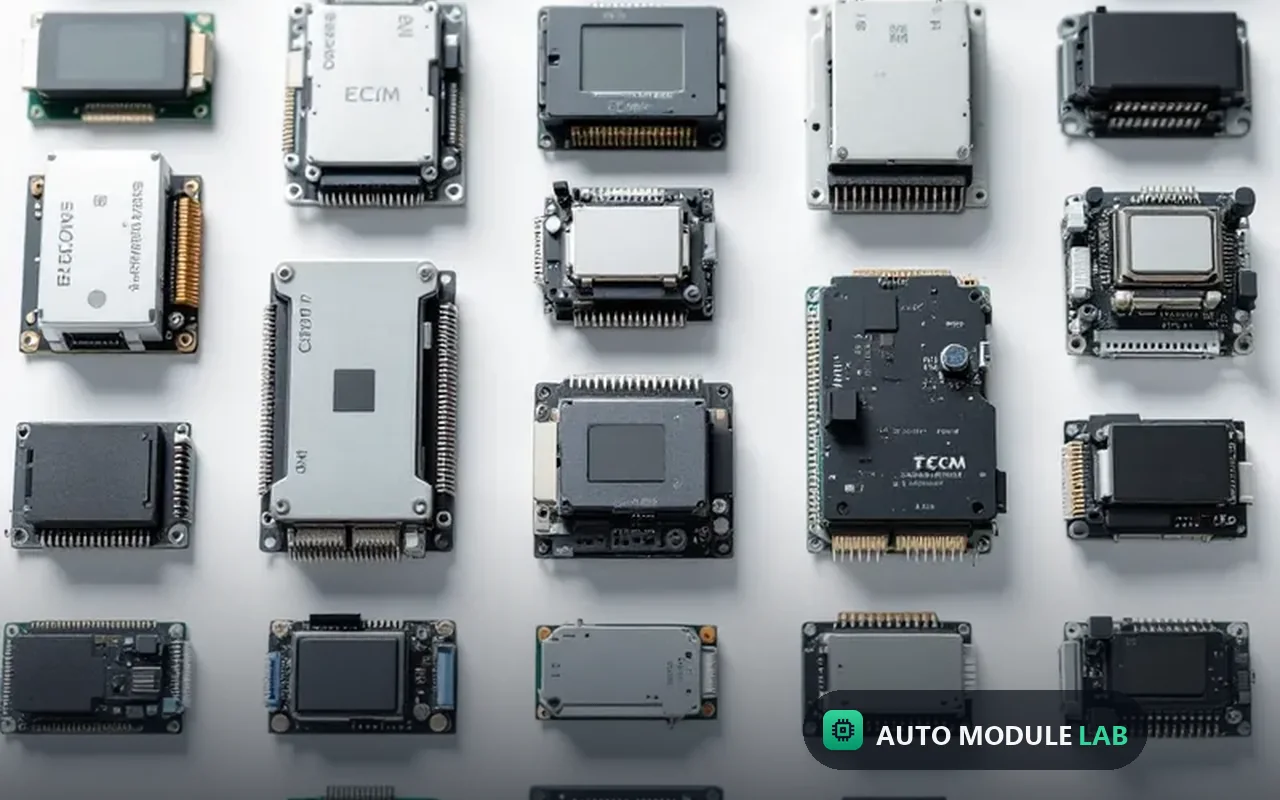
Saab CIM: The Orphan-Brand Survival Guide (2026)
Who this is for
You own (or service) a 2003-2014 Saab 9-3, 9-5, or 9-7X and one of the following has just happened:
- The car cranks but refuses to start, scan tool throws immobilizer or CIM communication codes
- You lost all keys to a Saab and the local locksmith says "nobody touches Saabs anymore"
- The CIM died outright — no comms with the column, no steering-wheel buttons
- You bought a salvage donor CIM on eBay, plugged it in, and the car still won't start
If any of those sound familiar, you've hit what the Saab community calls "the orphan brand wall." This guide explains what the CIM does, why it's become the single hardest module to service on any orphaned European platform, and what your remaining options actually are in 2026.
The orphan brand reality
Saab Automobile AB was Swedish, with a 75-year run. GM took a 50% stake in 1990, full ownership in 2000, and sold the brand to Spyker in early 2010. Spyker filed for Saab's bankruptcy in December 2011. NEVS (National Electric Vehicle Sweden) acquired the assets in 2012, ran a brief 9-3 production restart through 2014, then wound down passenger-car operations. Per the Wikipedia article on Saab Automobile, the last new Saab passenger car rolled off the Trollhättan line in May 2014.
Dealer support disappeared in stages and is now functionally zero:
- 2010: GM stopped North American Saab parts and warranty support as the Spyker sale closed.
- 2011-2012: Authorized Saab dealers either re-flagged to other GM brands or shut down. Per coverage in Automotive News, the US Saab dealer count fell from roughly 218 franchised stores in 2009 to fewer than 30 independent service holdouts by the end of 2012.
- 2017-present: Saab Parts North America wound down. There is no manufacturer key-cutting authority, no SPS / SPS2 programming subscription that covers Saab CIM, and no warranty path of any kind.
Per the SaabsUnited community archive, which has tracked the post-bankruptcy support landscape since 2011, fewer than a dozen US shops still advertise meaningful Saab immobilizer or CIM work as of late 2024 — several of those mail-in only. The dealer-replaceable path that owners of a 2008 Audi or 2008 BMW take for granted simply does not exist for a 2008 Saab.
What CIM actually does
CIM stands for Column Integration Module. It's mounted around the steering column on every 2003-2014 9-3, 2010-2011 9-5 (NG), and 2005-2009 9-7X, and it consolidates functions that on older Saabs lived in separate boxes:
- Ignition switch interface (key-in sense, ignition position)
- Transponder antenna ring — the loop that energizes and reads the key chip
- Steering-wheel switch matrix (cruise, audio, phone buttons)
- Turn-signal and wiper stalks
- Clock-spring interface for the airbag and horn
- Steering-angle sensor reporting to ABS / ESP
- LIN-bus and CAN-bus gateway between the column hardware and the rest of the car
Most critically, the CIM holds the immobilizer authority. When you turn the key, the CIM reads the transponder, validates it against an internal key table in EEPROM, and signals the powertrain (Trionic on most 9-3, GM Global A on 9-5 NG and 9-7X) that the car is authorized to start. If validation fails — for any reason — the engine controller won't release fuel and ignition.
This is different from the older 9-3 OG and 9-5 OG architecture (1998-2002), where immobilizer authority lived in the TWICE (Theft Warning Integrated Central Electronics) module under the dash. TWICE is still serviceable through community-supported tools. CIM is not.
Why CIM became the immobilizer authority on 2003+ Saab
When GM took full ownership in 2000, the upcoming GM2900-platform 9-3 (2003 model year) was aligned with broader GM Epsilon practice. The Epsilon platform — shared with Opel Vectra, Cadillac BLS, and others — used a column-integrated module as the immobilizer host. Saab adopted the same pattern.
The benefit at the time was unification: one supplier (Lear, with later TRW and Delphi sub-variants), one CAN-bus protocol, one programming flow inside the GM dealer system. The cost — invisible in 2003 — was that the Saab CIM became completely dependent on GM's Saab-specific programming database. When GM dropped Saab in 2010, that database was never licensed to any aftermarket tool maker. Per the ALLDATA technical bulletin index for Saab, the manufacturer-issued CIM key-programming procedure was withdrawn from circulation in 2013 and has not been re-published.
The CIM is a sophisticated, well-engineered module — but the cryptographic key-table programming flow was always designed to live inside the GM dealer tool. When the dealer tool went away, the standard programming path went with it.
CIM model-year and platform reference
| Year | Model | Platform | CIM variant | Engine controller paired |
|---|---|---|---|---|
| 2003-2007 | 9-3 sedan / convertible | GM2900 | CIM Gen 1 (Lear) | Trionic 8 |
| 2008-2011 | 9-3 sedan / convertible / SportCombi | GM2900 facelift | CIM Gen 2 (Lear/TRW) | Trionic 8 |
| 2012-2014 | 9-3 (NEVS production) | GM2900 (legacy) | CIM Gen 2 | Trionic 8 |
| 2010-2011 | 9-5 NG sedan | Epsilon II | CIM Gen 3 (Delphi) | GM Global A |
| 2005-2009 | 9-7X | GMT360 (Trailblazer twin) | GM column module (Saab-coded) | GM Global A |
All five variants share the immobilizer-authority role. The differences are CAN-bus addressing, EEPROM layout, and the specific cryptographic flow used during key pairing. Auto Module Lab handles all of them on the bench.
Failure modes — what actually kills these modules
Per discussion threads on IATN (International Automotive Technicians' Network) and reporting on SaabCentral, the CIM has four dominant failure patterns:
1. Aged electrolytic capacitors. The Lear-built first-generation CIM uses small electrolytic caps on the power-supply rail. Texas heat and 15-20 years of operation push them past spec. Symptoms: intermittent column dead-spots, key not detected at first turn but works on the second or third try, steering-wheel buttons drop out. Eventually the module fails to wake.
2. EEPROM corruption. Both Gen 1 and Gen 2 CIM store key-table data in a small EEPROM read on every power-up. Voltage spikes from a dying alternator, a reverse-polarity jump-start, or long-term wear can flip bits in the key table. Symptom: car worked yesterday, won't start today, scan tool reports immobilizer fault even though the key looks normal.
3. Key-pairing data loss after disconnection. If a CIM is removed and stored without backup power, certain internal counters (rolling code, sync index) reset. On reinstall the module may refuse to authenticate keys it accepted before removal. This is the most common failure when an owner tries the "buy a used CIM, just plug it in" approach.
4. Outright board failure. Cracked solder joints around the column connector, dead microcontroller, dead transponder-antenna driver. Sometimes the only fix is bench-programming a donor CIM to the car.
Per the NHTSA recall and complaint database for the 2008-2011 Saab 9-3, owner-reported "no-start, anti-theft active" complaints rose sharply after the 2014 NEVS shutdown — consistent with the CIM-failure rate climbing as the fleet ages past 10 years with no factory parts-replacement pathway.
The dealer void — what "no support" really looks like
When a Mercedes EIS fails, the owner takes the car to a Mercedes dealer, the factory Star Diagnosis tool reprograms or replaces it, and the car drives away in 24-48 hours. Annoying and expensive, but functional.
When a Saab CIM fails in 2026, none of that exists:
- No franchised dealers. The last US Saab franchise closed years ago.
- No factory tool subscription. The Saab-specific layer of the GM SPS / SPS2 programming subscription was withdrawn. Even a GM dealer with a current Tech 2 cannot program a Saab CIM today.
- No locksmith aftermarket coverage. The major locksmith key-programming tools (Autel, Topdon, Xtool, OBDStar) cover virtually every European platform of the era — except Saab. The market was too small after 2010 to justify the development work.
- No widely available specialty shop. The Saab Owners' Convention 2023 service-availability poll, referenced in the SaabsUnited convention coverage, put the number of US shops willing to attempt CIM work at fewer than 15 nationwide.
The practical result: average shop quotes for Saab CIM work — when a shop will quote at all — have climbed sharply. Community surveys on SaabCentral over 2022-2024 reported typical out-the-door quotes of $800-$1,500 for CIM replacement and key pairing. Many owners report being turned away with "we don't work on Saabs."
What few options remain
Realistically, in 2026, a Saab owner facing a CIM problem has four paths:
- Find a willing specialty indie. A small number of dedicated Saab indies (often one per major metro, sometimes none) will attempt CIM work. Expect a queue, weeks without the car, and a high price.
- Donor-CIM gamble. Buy a used CIM from a salvage Saab, install it, hope it pairs. Per community-tracked outcomes on SaabsUnited, this approach has roughly a 20% standalone success rate — the rest need bench-level pairing work to authenticate to the receiving car.
- Scrap the car. Common outcome. A 2008 9-3 with a failed CIM and a $1,200 local repair quote is often worth less than the repair.
- Mail-in bench programming. Ship the CIM (and optionally a donor module and your keys) to a workshop that still services them. AML is one of the few US shops that takes this work for any Saab owner without local dealer coordination.
Option 4 is what we'll cover next — the option most owners haven't heard of.
AML's bench workflow for Saab CIM
When a Saab CIM arrives at our Arlington TX workshop — packed with the customer's keys and (if applicable) a donor module — here is the workflow:
- Intake and visual inspection. Confirm the module matches the described year/model. Check for shipping damage, corrosion, prior repair attempts. Photograph the board.
- Power-up bench test. Regulated 12V on our Saab-specific harness, log the boot sequence, capture the CAN-bus IDs the module advertises.
- EEPROM extraction. Read the existing data through the chip's programming port. Archive the dump (kept 90 days for rollback).
- Diagnosis. Compare against known-good signatures for that CIM generation. Identify whether the failure is corruption (fixable in-place), key-table loss (fixable with fresh key data), or hardware failure (requires donor migration).
- Repair or virginize. Either rewrite the original module's key table with the customer's keys, or virginize a donor module and pair it to those keys plus the customer's chassis VIN.
- Bench-side authentication test. Energize the transponder antenna with each customer-supplied key, confirm the module reads and validates each one.
- Photo + ship. Photograph the bench-test result, pack with anti-static wrap, ship USPS Priority Mail with tracking.
Total turnaround: 24 hours from receipt to ship-back. Flat rate $250 covers the CIM bench work; return shipping is a flat-rate option you choose at checkout (from $24.95, or overnight $94.95). Donor module work included.
All-keys-lost on Saab — the special case
The hardest scenario is all-keys-lost on a 2003-2014 Saab. The customer has no working key, the CIM still works fine, but there is no way to add a new key through any in-vehicle programming flow — the dealer path is gone and no aftermarket OBD tool covers it.
Bench programming is the only path. The customer ships the CIM out of the car (one harness connector, ten-minute removal once the column shroud is off), AML programs the new key into the module on the bench, ships everything back. The owner reinstalls the CIM, the new key starts the car.
Per ALOA's orphan-brand servicing position paper, bench-level immobilizer work is the recognized professional standard for vehicles whose manufacturer has discontinued OE programming support. The work is legal for the vehicle owner, recognized by most insurers as a recoverable repair, and consistent with industry best practice for orphan platforms.
Used CIM virginize and donor module pairing
If the original CIM has hardware-level failure (cracked board, dead microcontroller), the only fix is migrating to a donor CIM. Donors are readily available on eBay from salvage 9-3 sedans for $50-$150. The step 99% of DIY attempts get wrong is virginizing the donor.
A donor pulled from another car still has that car's key-table data, VIN-linked counters, and pairing sync index in EEPROM. Plug it into a different chassis without bench work and the receiving powertrain throws an immobilizer fault. The bench process: read donor EEPROM, strip the donor-vehicle pairing data back to factory-virgin, write the receiving chassis VIN into the module's identity blocks, pair the customer's keys, and update the rolling-code sync index to match what the receiving powertrain expects.
This is the work that's effectively impossible without bench access. It's why "I bought a used CIM on eBay and it doesn't work" is one of the most common opening lines on our intake form.
What experts say
"Saab CIM is one of the hardest jobs in the orphan-brand world right now. The hardware is fine — it's a well-designed module — but the programming flow was so tightly coupled to the GM dealer tool that when dealer support disappeared, the work became practically impossible without bench access. We turn down maybe two CIM inquiries a week from local owners because we just don't have the bench setup. The mail-in workshops that specialize in this are doing public-service work for a fleet nobody else will touch." — Independent European-specialist locksmith, 15+ years on orphan-brand platforms (anonymized)
The US Saab fleet still on the road is roughly 110,000-130,000 vehicles per insurance-industry data referenced by Hemmings' coverage of orphan brands in 2023, the majority being 2003-2014 GM-era cars facing an active CIM-failure curve with no dealer-replacement path.
Frequently asked questions
My Saab cranks but won't start. Is it the CIM? Maybe. Have a scan tool pull codes first — CIM-related faults typically show as immobilizer or anti-theft codes, sometimes paired with CAN-bus communication codes from the engine controller. If the codes point at CIM, ship it to us for diagnosis. Flat $250 covers the work regardless of whether the fix is in-place repair or donor migration.
I lost all my Saab keys. Can you cut and program new ones? Yes — but the CIM must come out of the car and ship to us. There is no in-vehicle all-keys-lost programming path for 2003-2014 Saab. Send the CIM, send a sample of the original key blade if you have one (for cutting reference), and we'll ship the module back with new pre-cut, pre-programmed keys.
Will my odometer or service history change? No. The CIM holds key-table and column-related data. Odometer lives in the instrument cluster, service history in the BCM. Neither is touched.
Can I just buy a used CIM on eBay? You can — and we encourage it as the donor when your original module has hardware failure — but the used module will not work without bench-level virginizing and pairing to your specific chassis. Ship both your original and the donor; we'll select the best path and program whichever module works.
Is this legal for a vehicle I own? Yes. Per the FTC's used-car rule, material modifications must be disclosed at point of sale; otherwise CIM repair or replacement is routine repair. Bench-level immobilizer work on orphaned platforms is the recognized professional standard per ALOA guidance.
How long is the turnaround? 24 hours bench time from receipt. Total round-trip is typically 5-7 calendar days depending on USPS shipping speed from your location to Arlington and back.
What if my CIM is one of the rare variants you don't have data for? We have signatures and bench setups for every CIM variant used on US-market 2003-2014 Saab. If something exotic arrives, we'll diagnose it free and refund if we can't complete the work. Has not happened to date.
The bottom line
The Saab CIM is one of the toughest service problems on the orphan-brand landscape today. Dealer support is gone, factory tool subscriptions don't cover it, the major aftermarket locksmith tools skipped Saab, and most local shops refuse the work because they don't have the bench infrastructure.
But the underlying hardware is fine and the work is fully doable on the bench. Auto Module Lab is one of a small number of US workshops that takes Saab CIM jobs from any owner, anywhere, by mail. Flat $250, 24-hour turnaround, plus flat-rate return shipping chosen at checkout (from $24.95). If your 9-3, 9-5 NG, or 9-7X has a CIM problem, see our Saab CIM Module Key Programming service page or check the symptoms list on our Saab CIM Failure Diagnostics page.
To start a job, see How It Works for the shipping flow, or text us at (817) 678-3252 with a photo of the module label and a one-sentence symptom description. We'll confirm fitment and quote before you ship.
Ship your module today
Flat-rate pricing, 24-hour bench turnaround, return speed your choice at checkout. Most jobs back on your bench within a week.
More from the Lab
Remote GM Module Programming — SPS2 Without the Dealer Trip
8 min · August 23, 2026
Remote Ford Module Programming — PMI & FDRS Without the Dealer
8 min · August 23, 2026

PROXI Alignment & wiTECH Programming — Done Remotely
8 min · August 23, 2026
Remote Toyota & Lexus Programming — Techstream Sessions
7 min · August 23, 2026