
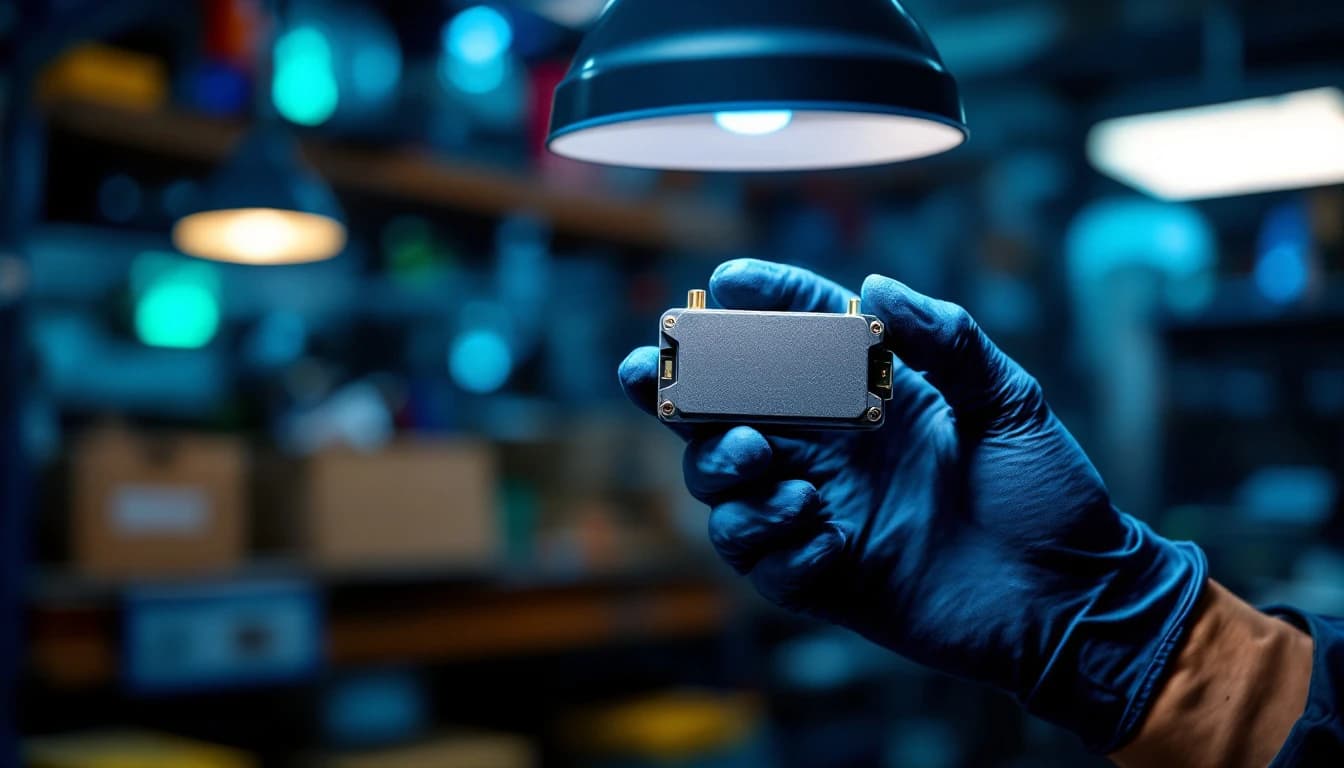
JLR KVM/RFA Virginize: When You Need It (2026 Guide)
When you need to virginize a KVM/RFA
You're reading this because one of these is true:
- You bought a used or salvage KVM/RFA on eBay or from a dismantler to replace a failed original, and your dealer or independent shop can't get it to pair
- Your original Range Rover, Range Rover Sport, Discovery, LR4, Jaguar XF, XJ, or F-Pace KVM/RFA failed, you sourced a donor unit, and now the car throws U0156, U2510, or "key not programmed" faults
- You're a mobile locksmith or independent JLR specialist trying to perform an online SDD/Pathfinder key session on a customer's car that has a replacement module someone else installed
- The dealer quoted $1,500-$2,400 for a new KVM/RFA plus programming labor and you want a sane alternative
The decision tree is short. If the module is physically healthy (no water damage, no burned traces, no opened can) and it came out of another JLR vehicle, virginizing it is almost always the right move. If the module is dead-dead (no comms, no power, board damage), virginization won't help — you need a different replacement unit first. See our JLR KVM Virginize service page for the workflow we run on every incoming module.
What "virginize" actually means
The Jaguar Land Rover KVM (Keyless Vehicle Module) used roughly 2010-2017 across Range Rover L322 facelift, L405, Range Rover Sport L320/L494, Discovery 4/LR4, and Jaguar XF/XJ — and the RFA (Remote Function Actuator) that replaced it on 2018+ L460/L461/L462 Range Rovers, Velar, Discovery 5, F-Pace, E-Pace, I-Pace, and current Jaguar sedans — both store three critical pieces of data in protected EEPROM:
- The vehicle VIN the module was originally married to at the factory or last successful pairing
- A security access counter that increments every time a key programming attempt is made, regardless of success or failure
- A key-pairing table holding the rolling codes and identifiers of every transponder, fob, or smart key the module has ever authorized
When the module is fresh from the JLR parts catalog, all three fields are blank or zeroed. The very first SDD (Symptom Driven Diagnostics) or Pathfinder online session writes the host vehicle's VIN, sets the security counter to its initial value, and registers the first key. From that moment on, the module is mechanically married to that VIN. Pulling it and installing it in a second vehicle is rejected at the gateway: the body control module reads the KVM/RFA's stored VIN, compares it to the vehicle's actual VIN, and refuses to allow programming.
Virginization is a bench-level EEPROM rewrite that returns those three fields to factory-blank state: the stored VIN is overwritten with the manufacturer's null pattern, the security access counter is reset to its initial as-built value, and the key-pairing table is cleared. After virginization, the module behaves exactly as a brand-new JLR parts-counter unit would. The next SDD or Pathfinder session writes your VIN, sets the counter, and pairs your keys. There is no functional difference between a virginized donor module and a $1,500 box from the dealer parts window.
Firmware version, hardware identifiers, and unrelated calibration data are left intact. Per Land Rover RAVE workshop manual documentation referenced across the L322 and L405 platform threads, the KVM authentication chain is a CAN-bus challenge-response between the gateway module, the KVM, and the engine ECU. Virginization is a software-only EEPROM modification — no hardware change is made to the module.
Why the dealer won't do it
Almost every customer who finds this page has already called the dealer. The answer is uniform: "We don't install used modules. You need a new one from us, $1,500 to $2,400 plus programming, plus the hour of labor to install it."
The dealer's position is policy, not technical limitation. JLR corporate guidance to franchised dealers, consistent with broader OEM trends documented by IATN / International Automotive Technicians Network on dealer parts policies, restricts most security-related module work to new factory parts only. Three reasons:
- Liability exposure on theft claims. If a used module installed at the dealer is later implicated in a vehicle theft (because of how the security counter was reset or because the donor module's history is unknown), the dealer faces insurance and brand-reputation risk
- Warranty stack. New modules carry a JLR parts warranty. Used modules carry no warranty, and the dealer doesn't want to absorb a warranty claim on a $50 eBay part
- Parts margin. Selling a new $1,500 module is materially more profitable than billing one hour of labor to install a customer-supplied used part
The technical work itself — running SDD or Pathfinder, performing the online security access session, registering keys — is the same in both cases. The dealer can do it. They choose not to. Independent JLR specialists and bench programmers like our Arlington TX workshop fill the gap.
Per ALOA / Associated Locksmiths of America trade-standard guidance on used-component reprogramming, virginization of donor security modules is considered an accepted remediation when the module is sourced legally and the customer owns both the vehicle and the donor part. We document chain of custody on every job and archive pre-virginize EEPROM dumps for 90 days.
Where used KVM/RFA modules come from
Used JLR security modules enter the market through three channels:
| Source | Typical price range | Risk profile |
|---|---|---|
| Salvage yard / dismantler (titled) | $80-$350 | Lowest — title trail, often photographed in vehicle |
| eBay listing (unspecified source) | $50-$200 | Medium — usually fine, occasionally returned-stolen parts |
| Forum classifieds / private sale | $40-$300 | Variable — depends entirely on seller |
The National Insurance Crime Bureau (NICB) publishes annual reports on parts-trafficking patterns; their data over the 2021-2024 window shows that high-value European security modules (BMW CAS/FEM, Mercedes EIS, JLR KVM/RFA) account for a measurable but small share of suspect parts circulation. The practical advice for buyers: prefer dismantlers with documented title trails, photograph the donor module before installing, and ship to a virginization workshop that maintains records.
Once a used KVM or RFA is in your hands, the next question is whether it's a good candidate. We can usually tell from a photo of the label and the connector pins. Text (817) 678-3252 with the part number visible and we'll confirm fitment before you ship.
Risks of NOT virginizing — security counter exhaustion
This is the part most DIY guides skip, and it's the part that turns a $300 fix into a $1,500 replacement.
The security access counter on JLR KVM and RFA modules is one-way. Every time a programming session attempts to authenticate against the module — successful or not — the counter increments. JLR engineered it this way as an anti-cloning measure: a malicious actor cannot indefinitely brute-force the security access seed because the counter eventually hits its ceiling and locks the module from any further security access requests. Per SAE J3138 cybersecurity guidance for automotive ECU access, this kind of monotonic counter is industry-standard for security-critical modules.
The implication for someone installing a used module without virginizing first: every attempt to pair a key, every failed SDD session, every "let me just try once more" with Pathfinder, increments the counter. Counters vary by module generation, but typical ceilings are documented across Jaguar Forums and Land Rover Forums at roughly 250-300 attempts for KVM and 200-250 for RFA. Used modules from salvage often arrive with counters already 40-80% consumed by the previous owner's repair attempts.
Once the counter is exhausted, the module is permanently locked. No SDD session can ever authenticate against it again. The only options are:
- Bench virginization (resets the counter — still works if performed before total exhaustion in some cases, but not always)
- Hardware-level chip-off and direct EEPROM rewrite (more expensive)
- Replacement with a new or differently-sourced module
A 2024 Jaguar Forums platform thread survey of used-KVM installation outcomes found that owners who attempted DIY key programming on a non-virginized donor module had roughly a 30-40% rate of inducing permanent module lockout before realizing virginization was required. Among owners who virginized first, then attempted key programming, success rate exceeded 95% on the first session.
The math is simple. The $300 virginization fee is insurance against turning a $100 eBay part into a $1,500 paperweight. Do the virginize step first.
AML's bench process
When your KVM or RFA arrives at the Arlington workshop, here's what happens — usually within 4-6 hours of receipt:
- Visual inspection — confirm the module matches the part number you described, no shipping damage, no water intrusion, no signs of prior opening or board rework
- Power-up bench test — confirm the module boots on our bench harness, returns expected firmware version, responds to standard UDS diagnostic requests
- EEPROM read — dump the full EEPROM contents, archive the pre-virginize state (kept 90 days for rollback or chain-of-custody verification)
- Security counter snapshot — read and record the current counter value so you know how much headroom remained on the donor module
- Virginization write — overwrite the VIN field with the factory-null pattern, reset the security access counter to its initial as-built value, clear the key-pairing table
- Verification read — re-read the EEPROM, compare against the expected virgin signature byte-for-byte, confirm all three fields are properly zeroed
- Bench comms test — power the module back up, confirm it responds to UDS requests as a "new" module would, verify the security access subfunction is ready to accept a fresh seed/key exchange
- Photo + ship — photograph the bench-test results, then USPS Priority Mail back to you with tracking
Total bench time: 45-90 minutes depending on module generation and EEPROM density. The 24-hour turnaround commitment is hard-floor — we ship back within one business day of receipt, every time.
What to ship
Pack and ship just the KVM or RFA module itself. We do NOT need:
- Keys (you'll pair those after installation, either yourself with SDD/Pathfinder or via an independent JLR specialist)
- The vehicle's VIN tag, registration, or paperwork (we work on the module only)
- Any other modules — the BCM, gateway, or instrument cluster are not part of this service
We DO need:
- The KVM or RFA module, antistatic-bagged and bubble-wrapped
- A printed copy of your order email inside the box (so we can match it to your service ticket on arrival)
- Tracked shipping — USPS Priority, UPS Ground, or FedEx Ground are all fine. Insurance for $500 is plenty.
Ship to the address on your order confirmation. Tape the box well; JLR modules are sturdy but not indestructible. See our shipping checklist on the Range Rover & Jaguar Key Programming page if you want photos of how to pack.
Cost vs new module from the dealer
Here's the apples-to-apples breakdown for a typical Range Rover L405 KVM replacement scenario:
| Path | Parts | Labor / programming | Total | Turnaround |
|---|---|---|---|---|
| Dealer new module + install | $1,450-$1,850 | $350-$550 | $1,800-$2,400 | 3-5 days |
| Independent shop, dealer new module | $1,450-$1,850 | $200-$350 | $1,650-$2,200 | 2-3 days |
| Used module + AML virginize + your install | $80-$200 | $300 (AML) | $380-$500 | 4-7 days incl. shipping |
| Used module + AML virginize + indy programmer | $80-$200 | $300 (AML) + $250-$400 (key pairing) | $630-$900 | 5-8 days incl. shipping |
The savings range from $900 to over $1,800 depending on which dealer-vs-independent path you'd otherwise take. For high-end L460 Range Rover RFA work, where dealer module pricing is closer to $2,000 and labor is correspondingly higher, the savings are even larger.
Per JaguarForums repair-tracking threads collated over 2023-2024, owners who chose the virginization path on used modules reported total out-of-pocket spend averaging $480 against dealer quotes averaging $2,050 — a 76% reduction on the median.
After-virginize key pairing
Virginization restores the module to factory-blank state. It does NOT pair your keys. After the virginized module arrives back at you, the next step is an online SDD or Pathfinder session to:
- Write your vehicle's VIN to the module
- Initialize the security access counter on first authentication
- Register your existing keys (or new replacement keys) into the now-empty pairing table
If you no longer have a single working key to register, that pairing session becomes a full Range Rover all-keys-lost job rather than a routine key add, and the sequencing and cost change significantly — read that first before you book anything.
You have three options for that session:
- DIY with Pathfinder hardware — if you own a Pathfinder unit and an active subscription, this is straightforward. The virginized module presents as new and accepts standard online programming
- Independent JLR specialist — most major metros have at least one independent who runs Pathfinder or SDD online sessions. Typical labor is $250-$400 for VIN write + 2 keys
- AML mobile partner network — for some metros we can recommend a mobile programmer who handles the on-vehicle pairing after we ship the virginized module back
Whichever route you choose, the virginized module behaves like a new one from the moment it powers on in your car. There's no special "this was virginized" flag for the dealer's tools to detect later.
What experts say
"Virginization changed the economics of JLR security module replacement in the indie world. Five years ago a failed KVM meant a $2,000 dealer trip or a Hail-Mary used-module install that worked maybe half the time. Today, with a $300 bench virginize and a $100 eBay module, the whole job is under $500 and the success rate is the same as a brand-new part. The hardest part is convincing customers that a used module is fine — once they understand the counter and the VIN-binding, they get it." — Independent JLR specialist, North Texas, 12 years European-marque experience (anonymized)
Per ALOA / Associated Locksmiths of America trade-standard guidance, bench-level virginization is now considered standard practice for independent shops servicing European security modules and is explicitly recognized in continuing-education curricula for advanced automotive locksmith certifications.
Frequently asked questions
Will virginization work on every used KVM or RFA? On every electrically-healthy unit, yes. If the module has water damage, burned traces, or fails our power-up bench test, we'll diagnose and notify you. The virginize fee is refunded minus a small diagnostic charge in those cases.
Does the donor vehicle's mileage or year matter? No, as long as the part number matches your application. A 2014 L405 KVM can be virginized and installed in any 2013-2017 L405. The VIN-binding is reset; nothing about the donor car carries over.
What if my car throws U0156 specifically? U0156 on JLR commonly maps to KVM/RFA loss of comms. Diagnose the wiring and gateway first; if the module itself is at fault, virginization of a donor module is the standard fix. See our U0156 Range Rover KVM diagnostics page for the full troubleshooting tree.
Can the dealer detect that the module was virginized? No. Once a virginized module is paired to your VIN by SDD or Pathfinder, it presents identically to a factory-new module.
Will this affect any other modules in the car? No. The KVM/RFA is the security gateway for keys and remote functions only. The engine ECU, transmission, ABS, airbag, BCM, and infotainment modules are independent and untouched.
Is bench virginization legal? Yes for modules you own that came from legally-titled sources. Per NASTF and ALOA trade-standard guidance, virginization is a routine remediation when the parts chain of custody is documented.
Can you also program keys after virginization? We're a bench-only workshop and don't do on-vehicle key programming. After we ship the virginized module back, you or your local JLR specialist handle the SDD/Pathfinder session.
The bottom line
Virginization is the correct fix when:
- You have a used or donor KVM (2010-2017) or RFA (2018+) from any Jaguar, Land Rover, or Range Rover application
- The module is electrically healthy (no water, no burn, no prior board work)
- The dealer has refused to install or program it because it's not a new part
- You want to spend $300-$500 total instead of $1,500-$2,400
It's $300 flat-rate at our JLR KVM/RFA Virginize service page with 24-hour bench turnaround; return shipping is a flat-rate checkout option (from $24.95). The original EEPROM is archived for 90 days. Most jobs are completed within a week of shipping the module out, and you'll spend a fraction of a dealer replacement.
If you're not sure whether your symptoms match a KVM/RFA failure, whether your donor module is healthy enough to virginize, or which part number applies to your vehicle, text us at (817) 678-3252 with a photo of the module label and a one-sentence description of the symptom — we'll confirm fitment and viability before you ship.
Ship your module today
Flat-rate pricing, 24-hour bench turnaround, return speed your choice at checkout. Most jobs back on your bench within a week.
More from the Lab
Range Rover, Land Rover & Jaguar Key Replacement Cost in 2026: Dealer vs Locksmith vs Mail-In KVM/RFA Programming
11 min · July 9, 2026
Range Rover All Keys Lost: The Real Fix Path (2026)
13 min · May 30, 2026
Range Rover & Jaguar Won't Start? KVM / RFA Failure, Recovery, and Key Options
12 min · July 13, 2026
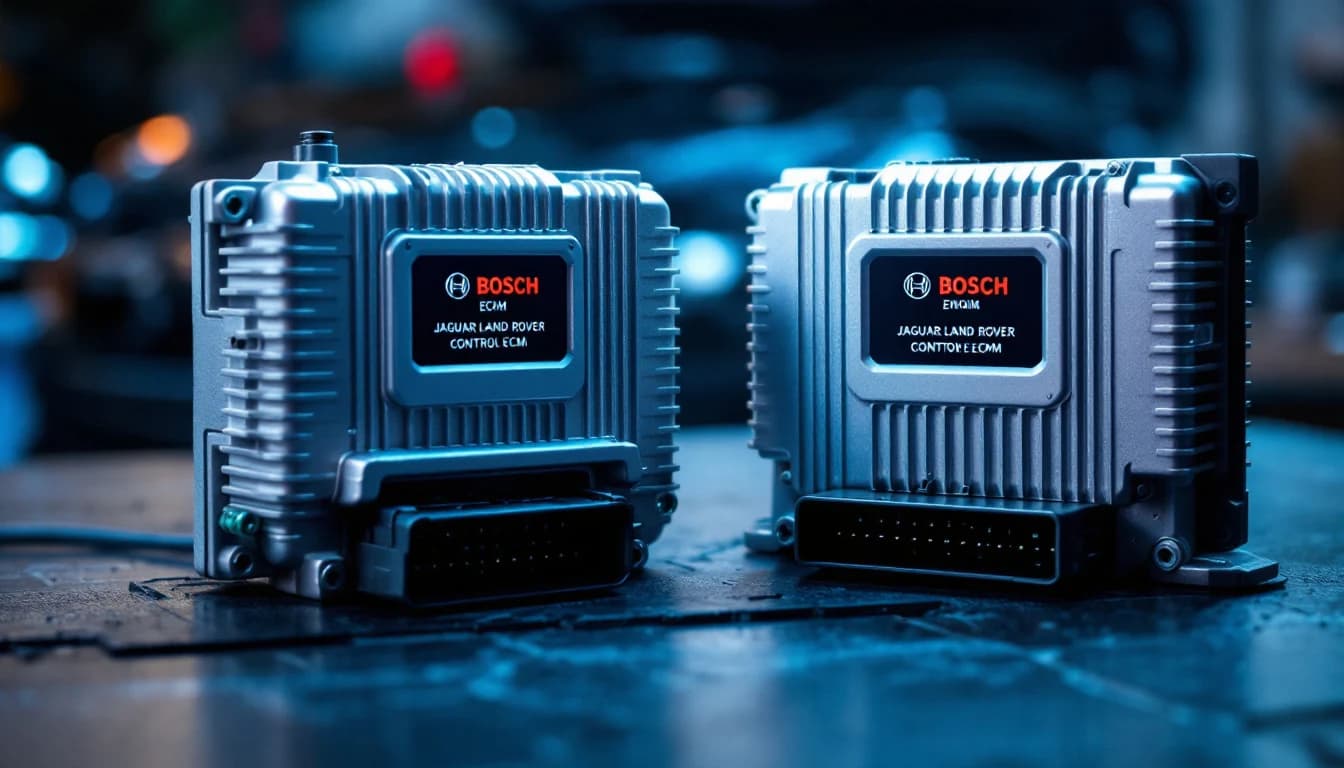
Land Rover & Jaguar CPLA ECM Failure: Why a Used ECM Won’t Just Plug In — and How Mail-In Cloning Fixes It
11 min · July 9, 2026