
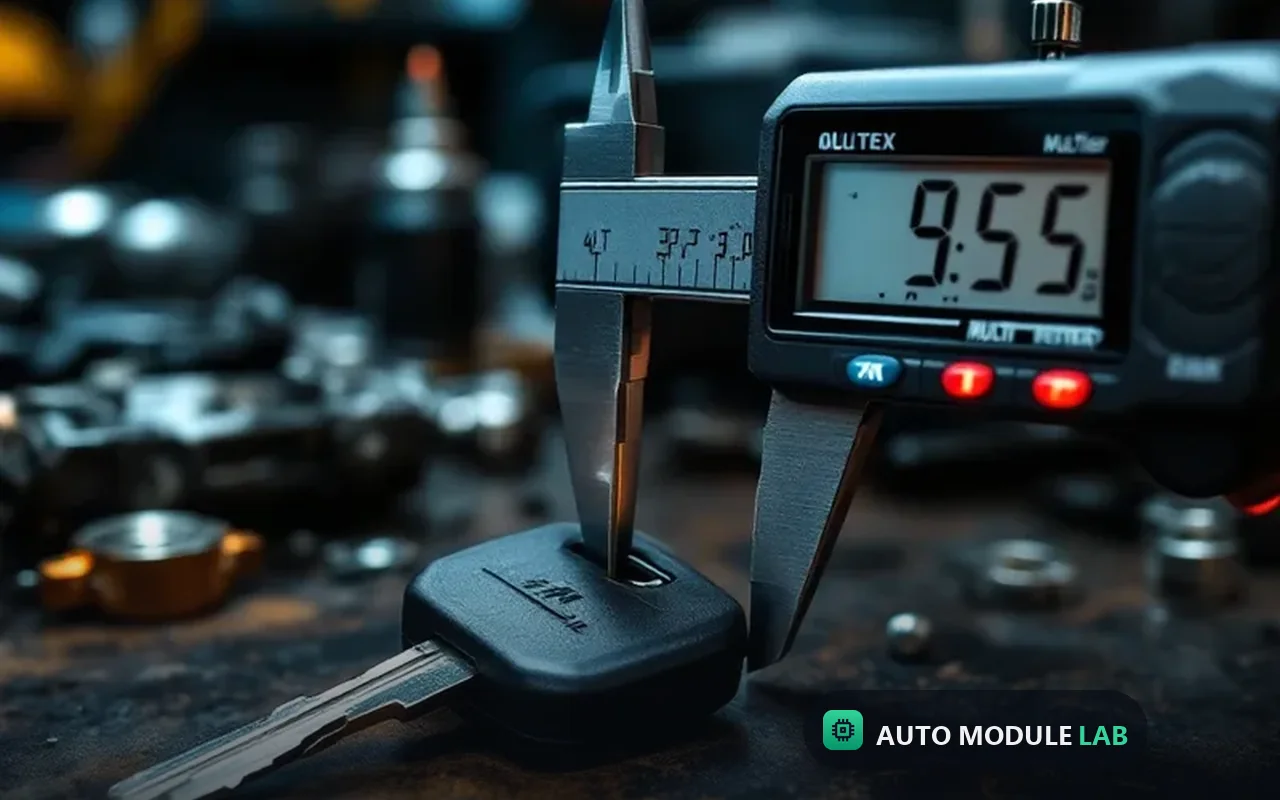
Range Rover, Land Rover & Jaguar Key Replacement Cost in 2026: Dealer vs Locksmith vs Mail-In KVM/RFA Programming
The short answer
If you searched "Range Rover key replacement cost" you want numbers, so here they are up front, for 2010-2025 Range Rover, Land Rover, and Jaguar vehicles:
- Franchised JLR dealer, add-a-key: commonly $600-$1,500 all-in — fob, cutting, programming labor, and usually a diagnostic line item.
- Franchised JLR dealer, all keys lost: $2,000-$3,500 is the range we hear most from customers holding written quotes, and it usually includes a tow and a 2-4 week wait on parts and security authorization.
- Mobile automotive locksmith: frequently a polite decline. The minority who take JLR work price it as a specialty call — when they can do it at all with zero working keys.
- Mail-in KVM/RFA module programming: $550 flat through our Range Rover / Jaguar key programming service — cut blade, programmed smart key, all-keys-lost or add-key, 24-hour bench turnaround after the module arrives, plus flat-rate return shipping picked at checkout (from $24.95). The car never leaves your driveway; the module does.
The rest of this guide explains where every one of those dollars goes, why the spread between the paths is so large, and which situations push you toward one path or another. If your situation is specifically zero working keys and you want the step-by-step recovery plan rather than the cost math, read our companion piece: Range Rover all keys lost — what to do.
Why JLR keys cost more than almost any other brand
On most volume brands — Toyota, Honda, Ford, GM, Hyundai — a locksmith plugs a programmer into the OBD-II port, authenticates with the immobilizer, and adds a key in the driveway in under an hour. The key hardware is cheap and the labor is routine, which is why those jobs price in the low hundreds.
Jaguar Land Rover took a different road starting around the 2010 model year. Key authority lives in a dedicated security module — the KVM (Keyless Vehicle Module) on roughly 2010-2017 vehicles, and the RFA (Remote Function Actuator) on 2018-and-newer platforms. With at least one working key present, those modules will accept an additional key through the diagnostic port. With zero working keys, they will not: there is no OBD-II pathway to establish trust, by design. The module has to come out of the vehicle and be programmed directly on a bench.
That single architectural decision drives the entire cost structure:
- The dealer path treats the locked module as a parts problem — order a new virgin KVM/RFA, install it, pair it to the VIN.
- The locksmith path treats it as a tooling problem — and most locksmiths never bought the tooling.
- The mail-in path treats it as a bench problem — ship the module to someone who already owns the tooling and does the job every week.
Same job, three completely different bills. It also explains why owning one of these vehicles carries above-average service exposure generally: in the annual Vehicle Dependability Study published by J.D. Power, Land Rover has repeatedly ranked among the lowest-scoring brands in the industry for problems reported per 100 vehicles — and specialty electronics like the key system are exactly the kind of item that separates luxury service bills from mainstream ones. Ownership-cost coverage at Hagerty makes the same broad point about European luxury vehicles: the purchase price is only the ticket in; the specialty-service ecosystem is where the ownership math is won or lost.
Path 1: the dealer — where the $600-$1,500+ goes
A franchised dealer is the default answer, and to be fair, the dealer can always do the job. Here is what the invoice actually stacks up from, line by line, on an add-a-key:
- The smart key itself. A genuine JLR proximity fob is a several-hundred-dollar part at retail before anyone touches the car. Consumer pricing guidance at Kelley Blue Book has long put luxury-brand smart fobs in the hundreds of dollars — commonly $200-$500+ for the part alone — and JLR fobs sit at the upper end of that band.
- Blade cutting. The emergency blade inside the fob is cut to a code pulled for your VIN.
- Programming labor. Pairing the key with the dealer's Pathfinder/SDD diagnostic system is billed at the posted door rate, and European-franchise door rates commonly run well north of $150 per hour in metro markets.
- The diagnostic line. Many dealers book a diagnostic hour before the key work proper, especially if the car arrived with any complaint beyond "I want a spare."
Stack those and a routine add-a-key lands in the $600-$1,500 window depending on model, market, and how the labor is booked. Nobody itemizes that on the phone; you find out at pickup.
Now the harder case — all keys lost. The dealer process changes character completely:
- Proof of ownership first. Title or registration plus photo ID, checked before any key work begins. This is standard industry guidance from the National Insurance Crime Bureau — and it protects you, because the same NICB reported that U.S. vehicle thefts have run above one million vehicles in recent peak years. Every legitimate key programmer, including us, enforces the same requirement.
- A tow. The car cannot be driven to the dealer without a key. Roadside guidance published by AAA puts typical flatbed towing beyond any included allowance at several dollars per mile — commonly quoted in the $4-$7 per mile range — so a 30-mile tow can add $150-$400 before anyone looks at the car.
- The security wait. With no working key, many dealers order a new virgin KVM/RFA from JLR rather than bench-program the existing one, and key codes and security authorization move through restricted channels. Parts availability from Jaguar Land Rover distribution varies from days to multiple weeks depending on the module and platform.
- Module replacement plus pairing labor plus keys. This is how a lost-keys situation becomes a $2,000-$3,500 invoice with the vehicle sitting at the dealer for two to four weeks.
The important thing to understand is that the dealer is not gouging you, exactly. They are running a parts-replacement playbook on a problem that is fundamentally a bench-programming problem. The playbook works; it is just the most expensive possible way to work.
Path 2: the mobile locksmith — why "we don't do Land Rover" is the normal answer
The second call most owners make is to a local automotive locksmith, and the JLR-specific answer is usually no. The reason is economics, not skill. Full JLR bench capability — the pass-thru hardware, the JLR software licensing, the EEPROM tooling for KVM and RFA work — is a five-figure investment, and the number of JLR all-keys-lost calls in any single local market rarely justifies it. A locksmith who invested that money into Toyota, Honda, Ford, and GM coverage instead serves twenty times the call volume.
So the typical outcome of the locksmith call is one of three things:
- A decline and a referral to the dealer,
- A decline and a referral to a bench specialist (the good outcome — that is exactly the work we exist for), or
- An add-a-key appointment if and only if you still have one working key, since with a working key present the job becomes a routine OBD-II add on many JLR platforms.
That last point matters for the cost math: the moment your last working key is lost, the price of the job multiplies. Industry consumer guidance from locksmith trade bodies consistently pegs the all-keys-lost premium at several times the add-a-key price across brands, and on JLR platforms — where AKL means module-out bench work — the multiple is at its most extreme. If you have one working key today and no spare, the single cheapest thing you will ever do for this vehicle is get a second key made this month.
"Land Rover and Jaguar are the jobs I hand off. I carry coverage for a dozen brands, but a Range Rover with no keys means pulling the KVM and putting it on a bench with JLR-specific tooling I can't justify owning for the four or five calls a year I get. The customers who fight that reality end up at the dealer for three grand. The ones who accept it ship the module to a bench and pay a fraction of that." — Mobile automotive locksmith, 14 years in the trade, U.S. Southwest (anonymized)
Path 3: mail-in KVM/RFA programming — flat price, car stays home
The third path inverts the whole problem. Instead of moving a 5,000-pound vehicle to the tooling, you move a one-pound module.
Here is the entire cost structure of our Range Rover / Jaguar key programming service:
- $550 flat. That covers the bench work on your KVM or RFA, a new smart key cut to your VIN, transponder and proximity programming, and verification that the module accepts the key before anything ships back. All-keys-lost and add-key are the same flat price.
- Shipping to us: you pay your carrier of choice to send the module to our workshop at PO Box 120241, Arlington TX 76012 if you ship USPS — or 1009 Oakwood Ln # 120241, Arlington TX 76012 if you ship UPS or FedEx (UPS and FedEx cannot deliver to a PO Box).
- Return shipping: selected and paid at checkout — Standard $24.95 (3-5 days), UPS 2-Day $54.95, or UPS overnight $94.95 — with signature required on the returned key for security.
- Turnaround: 24 hours on the bench after the module arrives. Total round trip is typically about a week, most of it transit time.
- Proof of ownership: required on every key order, no exceptions. Title or registration plus ID, matched to the VIN. This is the same anti-theft discipline the NICB recommends across the industry, and it is why a legitimate mail-in service is not a security loophole.
What you give up versus the dealer is convenience of a single drop-off: someone has to get the module out of the car (the KVM and RFA are owner-accessible with basic hand tools on most platforms, and we provide chassis-specific removal guidance) and reinstall it when it returns. What you get back is the difference between $550 plus shipping and a four-figure dealer invoice — on the exact same underlying bench work.
Cost comparison: the three paths side by side
| JLR dealer | Mobile locksmith | Mail-in bench (AML) | |
|---|---|---|---|
| Add-a-key (one working key) | $600-$1,500 | Varies — where offered | $550 flat |
| All keys lost | $2,000-$3,500 typical | Usually declined | $550 flat |
| Towing required | Yes if no key ($150-$400 typical) | No (mobile) | No — module ships, car stays |
| Parts wait | Days to 4+ weeks on module orders | n/a | None — your module is reprogrammed |
| Turnaround | 1-4 weeks (AKL) | Same day (add-key only) | 24-hr bench; ~1 week round trip |
| Return shipping | n/a | n/a | From $24.95, chosen at checkout |
| Proof of ownership | Required | Required | Required |
| Warranty on programming | Varies | Varies | 6 months |
The pattern is simple: with a working key in hand, the paths are price-competitive and the locksmith or dealer convenience may be worth it. With zero working keys, the mail-in bench path is the only one that does not multiply.
The hidden line items nobody quotes on the phone
Whichever path you compare, watch for the costs that never appear in the first phone quote:
- The tow — the single most-forgotten line on an AKL dealer job.
- The diagnostic hour — commonly booked in front of dealer key work.
- Storage or re-visit fees — if the dealer waits weeks on a module, some stores bill lot time.
- A second fob — quotes are almost always for one key. If you want a spare (and after an AKL scare, you very much do), price it into the decision. On our service, an add-key later is the same flat-price structure, and it is dramatically cheaper insurance than a second AKL event.
- Rental or rideshare during the wait — two to four weeks without an SUV is a real cost. A mail-in round trip of about a week, with the car safely parked at home the entire time, compresses that exposure.
Special cases that change the math
Three scenarios deserve their own numbers, because they are common enough that we run them weekly:
1. You bought a used or salvage KVM/RFA as a "cheap fix." A donor module from another vehicle is locked to its original VIN and will not pair to your car as-is. Our JLR KVM/RFA virginize service wipes a healthy donor back to factory-virgin state for $300 flat, ready for pairing — and if you order the virginize together with the $550 key programming, we take $50 off the combined invoice. That is the correct route when your original module is genuinely dead rather than merely keyless.
2. Your Jaguar XF lost its mind after a flat battery. A surprising share of "I need a new key" calls on the XF are not key problems at all — a low, disconnected, or jump-started battery corrupted the Central Junction Box, and the car reports Smart Key Not Found even though the key is fine. That failure is recoverable without shipping anything: our Jaguar XF BCM remote recovery rebuilds the corrupted module over a secure remote J2534 session for $550, right where the car sits. Diagnose before you buy a key you may not need.
3. Your vehicle is older than 2010. Pre-2010 JLR platforms use earlier immobilizer architectures with different (and often cheaper) recovery paths. The $550 flat price and the KVM/RFA process described here apply to 2010-2025 vehicles; message us your VIN and we will point you at the right service.
Frequently asked questions
How much does a Range Rover key cost at the dealer in 2026? Plan on $600-$1,500 for an add-a-key once the fob, cutting, programming labor, and diagnostic line are stacked — and $2,000-$3,500 with a tow and a multi-week wait if all keys are lost. Quotes vary by model, market, and how the dealer handles the security module.
Why is the mail-in price the same for add-a-key and all keys lost? Because on the bench they are the same job. Once the KVM or RFA is on our bench, programming a key into it costs us the same effort whether the car had one key or none. The dealer's price fork exists because their AKL playbook involves replacing the module; ours does not.
Is $550 really the whole price? $550 covers the bench work, the cut smart key, programming, and verification. You additionally pay shipping to us, and return shipping is selected at checkout — Standard $24.95, UPS 2-Day $54.95, or overnight $94.95. There are no parts surcharges: your existing module is reprogrammed, not replaced.
How long is my car out of action? With mail-in, the car is never towed anywhere — it sits at home while the module travels. Typical round trip is about a week: transit to Arlington, 24 hours on the bench, and your chosen return-shipping speed back.
What do you require before programming a key? Proof of ownership matched to the VIN — title or current registration plus photo ID — on every order. This is non-negotiable and it is the industry standard for legitimate key work.
Can I remove the KVM or RFA myself? On most chassis, yes: the modules live under a seat, in a footwell, or behind the glovebox and come out with basic hand tools. We provide removal guidance specific to your model when you order, and any general mechanic can do the removal and reinstall in well under an hour if you prefer not to.
What if my module turns out to be faulty rather than just keyless? If your original module is damaged, a healthy used donor plus our $300 virginize service followed by key programming is the recovery path — with a $50 discount when both services are ordered together.
The bottom line
Range Rover, Land Rover, and Jaguar key replacement is expensive for a real architectural reason: since 2010, JLR has locked key trust inside the KVM/RFA module, and with no working key there is no shortcut through the OBD port. From there, the three paths diverge hard. The dealer solves it with parts and process — $600-$1,500 for an add-key, $2,000-$3,500 with towing and weeks of waiting for all keys lost. The typical mobile locksmith declines the job because the tooling economics don't work locally. The mail-in bench path solves it for a flat $550, because the module travels instead of the vehicle.
If you still have one working key, get a spare made now — it is the cheapest decision in this entire article. If you are already at zero keys, start at the Range Rover / Jaguar key programming service page, have your proof of ownership ready, and your module can be on a bench in Arlington this week — with the car parked safely at home the whole time.
Ship your module today
Flat-rate pricing, 24-hour bench turnaround, return speed your choice at checkout. Most jobs back on your bench within a week.
More from the Lab

Range Rover All Keys Lost: The Real Fix Path (2026)
13 min · May 30, 2026
JLR KVM/RFA Virginize: When You Need It (2026 Guide)
12 min · May 30, 2026

Range Rover & Jaguar Won't Start? KVM / RFA Failure, Recovery, and Key Options
12 min · July 13, 2026
Land Rover & Jaguar CPLA ECM Failure: Why a Used ECM Won’t Just Plug In — and How Mail-In Cloning Fixes It
11 min · July 9, 2026