
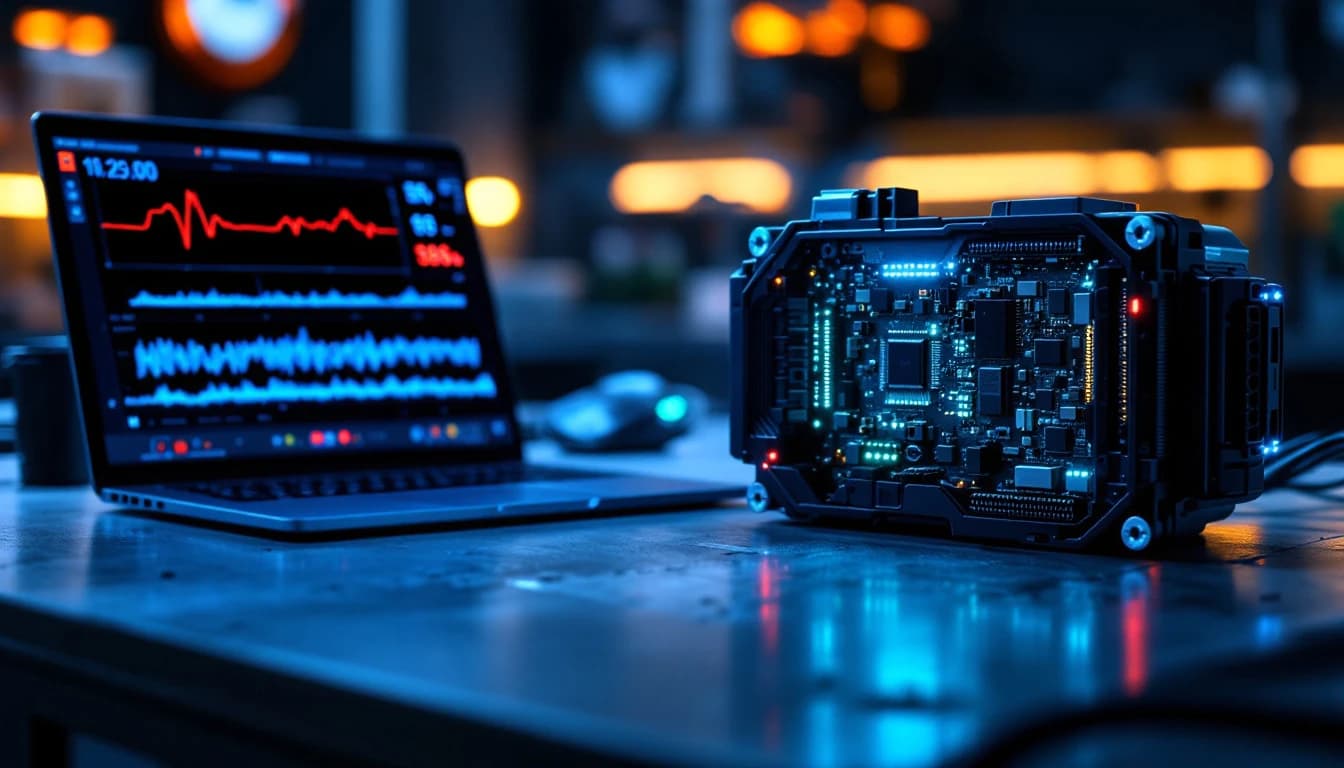
GPEC2 / GPEC2A PCM Unlocking Guide for Chrysler (2026)
Who this is for
This guide is for the owner, tuner or independent shop that bought HP Tuners, EFILive or a DiabloSport tool, plugged into a 2015-or-newer Hemi or Pentastar Chrysler product, and hit a wall: the software reports the PCM is locked, encrypted, or simply will not read. If you drive a Charger, Challenger, Durango, Grand Cherokee, Trackhawk, Hellcat, Scat Pack, 392, Ram 1500 or Chrysler 300 from that era, you are almost certainly looking at a Continental GPEC2 or GPEC2A controller, and that lock is the reason your tool stops at the door.
It is also for the engine-swap builder dropping a salvage Hemi into a project, and for the diesel or gas tuner who needs a clean read of the factory calibration before any tuning work begins. Auto Module Lab unlocks the controller itself so your existing tools work the way they were meant to. We are a nationwide mail-in shop in Arlington, Texas, and the bench unlock is the same regardless of which state your vehicle lives in.
What GPEC2 and GPEC2A actually are
GPEC stands for Global Powertrain Engine Controller, the family name Stellantis (formerly FCA) uses for the Continental-built engine control modules across its modern lineup. The GPEC2 generation arrived around the 2014-2015 model year and the revised GPEC2A followed shortly after, both running Continental hardware with an Infineon TriCore microcontroller at the center.
These are not the simple flash-and-go controllers of the 2000s. They use a secured boot process and an encrypted calibration partition. Continental is one of the largest tier-one automotive electronics suppliers in the world; the company reports tens of billions of euros in annual sales across its automotive divisions, and the security architecture in these controllers reflects that scale. The factory does not want third-party software writing arbitrary code into a controller that manages fuel, spark, boost and the immobilizer handshake, so it locks the read and write paths behind a seed-key security access routine defined in the ISO 14229 Unified Diagnostic Services (UDS) standard.
When a consumer tool meets that lock, one of three things happens: the read fails outright, the read returns garbage, or the tool refuses to write a modified calibration back. Bench unlocking removes that barrier on the controller itself.
Where GPEC2 and GPEC2A show up
| Platform | Typical years | Engine family | Controller |
|---|---|---|---|
| Dodge Charger / Challenger | 2015-2023 | 5.7 / 6.4 Hemi, 3.6 Pentastar | GPEC2A |
| Dodge Durango | 2015-2023 | 5.7 / 6.4 Hemi, 3.6 Pentastar | GPEC2A |
| Jeep Grand Cherokee | 2015-2021 | 5.7 / 6.4 Hemi, 3.6, Trackhawk 6.2 | GPEC2 / GPEC2A |
| Hellcat / Trackhawk / Demon | 2015-2023 | 6.2 supercharged Hemi | GPEC2A |
| Ram 1500 | 2015-2018 | 5.7 Hemi, 3.6 Pentastar | GPEC2 / GPEC2A |
| Chrysler 300 | 2015-2023 | 5.7 Hemi, 3.6 Pentastar | GPEC2A |
Model-year overlap is real, and the only way to be certain which variant you have is the part number and software ID on the controller. We confirm that on the bench before we touch anything.
How the lock works, in plain terms
Modern engine controllers separate the read path, the write path and the security access into distinct functions. When your tuner asks to read the flash, the controller demands a security handshake first: it sends a random "seed," the tool must compute the correct "key" with a secret algorithm, and only a matching key opens the door. This is the standard seed-key model that the ISO 14229 UDS service 0x27 defines, and it is the same mechanism used across most of the industry.
On GPEC2 and GPEC2A, the factory algorithm is not published, and the calibration region is encrypted on top of that. A locked controller therefore looks like a brick to consumer software even though the hardware is perfectly healthy. Bench unlocking works at the hardware level: with the controller out of the car and on the bench, we access it through methods that do not depend on the published diagnostic algorithm, then write the controller into a state where standard tools can read and write the calibration cleanly. After that, your HP Tuners or EFILive license behaves normally.
"When HP Tuners throws unsupported or locked on a 2015-plus Hemi, the controller is not broken, it is doing exactly what Continental built it to do. The seed-key algorithm is unpublished and the cal is encrypted, so consumer software hits a wall it was never given the key to. We open the read and write path on the bench so the tool you already paid for can finally see the file."
— Master automotive locksmith, 15+ years on Continental GPEC controllers (anonymized)
Failure modes and symptoms you will recognize
You do not get a check-engine light that says "PCM locked." Instead you see tool-side symptoms:
- Read aborts immediately. Your tuning software connects, identifies the vehicle, then fails the read with a security or authentication error.
- Partial or corrupt read. The read completes but the file is the wrong size or fails the tool's checksum validation.
- Write refused. You can read but every write attempt is rejected, so you can look but never tune.
- "Unsupported / locked ECU" message. The tool explicitly flags the controller as locked.
- No communication on a known-good controller. A salvage or swap controller that is otherwise healthy simply will not talk to consumer software.
If you are seeing any of these on a 2015-plus Hemi or Pentastar, the controller is almost certainly locked, not broken.
The exact mail-in process
We built the workflow to be boring and predictable, which is what you want when your controller is in the mail.
- Order online. Choose the PCM unlocking service at 250 dollars and pay. You get an order confirmation and a packing slip immediately.
- Remove the PCM and ship it. Disconnect the battery, unplug the controller, remove it, and mail it to: Auto Module Lab, PO Box 120241, Arlington TX 76012 if you ship USPS — or 1009 Oakwood Ln # 120241, Arlington TX 76012 if you ship UPS or FedEx (UPS and FedEx cannot deliver to a PO Box). Include the packing slip with your order number written on it.
- 24-hour bench turnaround. Once your controller is in hand, the unlock is completed within one business day on the bench. We verify the unlock by confirming a clean read and write path before it leaves.
- Flat-rate return shipping. We ship the unlocked controller back to you via the return tier you chose at checkout (from 24.95 dollars). You reinstall it, and your tuning software reads and writes normally.
That is the entire loop: pay, pick a flat-rate return tier, ship, 24-hour bench work. No appointment, no tow, no dealer.
Prefer not to ship the hardware?
If you already own a bench-flash tool such as a KESS3, AutoTuner or Magic Flex, you do not have to remove the controller at all. Read the file with your tool, send us the file, and we return an unlocked file you write straight back. That is the GPEC2 / GPEC2A instant online unlock at 150 dollars. It is the fastest path for shops and tuners who handle their own reads and writes and just need the lock removed from the file.
What to ship
For the mail-in unlock, send the engine controller only. You do not need to send keys, the BCM, or any other module. Pack it the way you would want to receive an electronic part:
- The PCM/ECM, fully removed from the bracket if it lifts off easily.
- The packing slip with your order number.
- Snug padding so the connectors and pins cannot shift in transit.
- A rigid box, not a padded envelope. These controllers have exposed connector pins that bend.
You do not need to send the calibration or any paperwork. We read what we need from the controller itself.
What this service does NOT fix
Honesty here saves everyone a wasted shipment. Unlocking is exactly that, and nothing more.
- It is not a tune. We open the read and write path. We do not modify your calibration, add power, or change any map. You or your tuner builds the tune afterward.
- It is not an emissions defeat. We do not delete catalytic converters, disable EVAP, defeat the EGR or DPF on diesels, or remove any federally required emissions control. Tampering with emissions equipment violates the Clean Air Act, which the EPA enforces with civil penalties. Unlock the controller for legal tuning and off-road or competition use where applicable; emissions compliance is your responsibility.
- It is not a repair. A controller with water damage, blown drivers or a dead processor is a hardware failure, not a lock. Unlocking will not revive dead hardware.
- It is not an immobilizer reset. GPEC unlocking opens the tuning path. If you have a separate no-start or SKIM/immobilizer issue, that is a different job.
- It does not change your VIN. We do not alter the VIN stored in the controller.
If your situation is one of these, tell us before you ship and we will point you to the right service.
Price versus the dealer and the alternatives
There is no dealer counterpart to "unlock my PCM for tuning," because the dealer's job is to keep it locked. The realistic alternatives are sending the controller to a remote unlocking service or buying a pre-unlocked controller, and the numbers favor a straightforward bench unlock.
| Path | Typical cost | Turnaround | Notes |
|---|---|---|---|
| Auto Module Lab mail-in unlock | 250 dollars | 24-hour bench + shipping | Flat-rate return shipping from 24.95 dollars, keeps your original controller |
| Auto Module Lab instant file unlock | 150 dollars | Same day, no shipping | You read/write the file yourself |
| Pre-unlocked controller (used) | 400-700+ dollars | Variable | Wrong calibration, often needs a relearn, VIN mismatch |
| Dealer | Not offered | n/a | Dealers do not unlock for aftermarket tuning |
Keeping your own controller matters more than the price line suggests. Your original PCM already carries the correct VIN, the correct immobilizer pairing and the correct calibration for your exact vehicle. Buy a random unlocked unit instead and you inherit somebody else's VIN, a possible immobilizer mismatch and a calibration that may not match your engine, transmission or options. The unlock-and-keep approach sidesteps all of that.
The broader cost trend is on your side, too. As vehicles add controllers, the locked-module problem grows: modern vehicles now carry dozens of electronic control units, and many premium models exceed 100, according to widely cited industry analysis from McKinsey. More controllers means more locks, and a clean bench unlock of the one you already own is the efficient answer.
Frequently asked questions
Will unlocking erase my tune or my calibration?
No. The unlock opens the read and write path; it does not modify your existing calibration. When you reinstall the controller it runs exactly as it did, except now your tuning software can read and write it.
Do I need to send my keys or the BCM?
No. For GPEC2 and GPEC2A unlocking we only need the engine controller. Keys and the body modules stay in your vehicle.
How do I know whether I have GPEC2 or GPEC2A?
You usually cannot tell from the dash. The part number and software ID on the controller label are the reliable indicators, and we confirm the exact variant on the bench before any work. The two are closely related and both are within our service.
My tool says the ECU is unsupported. Is that the same as locked?
Most of the time, yes. On 2015-plus Hemi and Pentastar vehicles, "unsupported" or "locked" from consumer software almost always means the factory security is blocking access rather than a true incompatibility. After unlocking, the same tool typically reads and writes normally.
Can you unlock the controller while it is still in the car?
Not for the mail-in service; that one requires the controller on the bench. If you own a bench-flash tool and can read the file yourself, the instant online file unlock handles it without removing the controller at all.
Is any of this legal?
Unlocking a controller you own is the customer's right to repair and modify their own property. What you do afterward is on you: legal performance tuning, off-road and competition use, and dyno work are common and legitimate. Defeating emissions controls on a street vehicle is not, and we do not provide that. See the EPA's guidance on tampering and aftermarket defeat devices for the line you should not cross.
What if the unlock does not work on my controller?
We verify a clean read and write path before the controller leaves our bench. In the rare case a controller cannot be unlocked because of a hardware fault, we tell you and we do not charge for an unlock we could not deliver.
The bottom line
GPEC2 and GPEC2A are locked from the factory by design, and that lock is exactly why your HP Tuners, EFILive or DiabloSport tool stalls on a 2015-plus Charger, Challenger, Durango, Grand Cherokee, Trackhawk, Ram or 300. Bench unlocking removes the barrier on the controller you already own, so your tools work the way you paid for them to. It is a clean, defined service: not a tune, not an emissions defeat, not a repair, just an unlock.
If you are ready, start with the PCM unlocking service for the mail-in route, or the instant online file unlock if you read your own files. You can review the full services list, see exactly how the mail-in process works, or read more about founder Adrian Torres and the bench experience behind every unlock. Ship to PO Box 120241, Arlington TX 76012 if you ship USPS — or 1009 Oakwood Ln # 120241, Arlington TX 76012 if you ship UPS or FedEx (UPS and FedEx cannot deliver to a PO Box), and expect a 24-hour bench turnaround, with flat-rate return shipping chosen at checkout (from 24.95 dollars).
Ship your module today
Flat-rate pricing, 24-hour bench turnaround, return speed your choice at checkout. Most jobs back on your bench within a week.
More from the Lab

GPEC2 GPEC2A PCM Clone Mail-In Guide (2026) — 250 Dollars
12 min · June 18, 2026
Chrysler PCM Replacement and SKIM: Why the Donor Computer Runs for Two Seconds and Dies
12 min · July 31, 2026
TIPM Replacement Done Right: Why a Used Chrysler TIPM Won't Accept Your Truck, and the One Step Dealers Charge $850 For
12 min · July 30, 2026
"Used EPS Modules Don't Work" — Why That's Only Half True, and How a VIN Mismatch Turns a $2,000 Steering Job Into a $449 One
11 min · July 30, 2026