
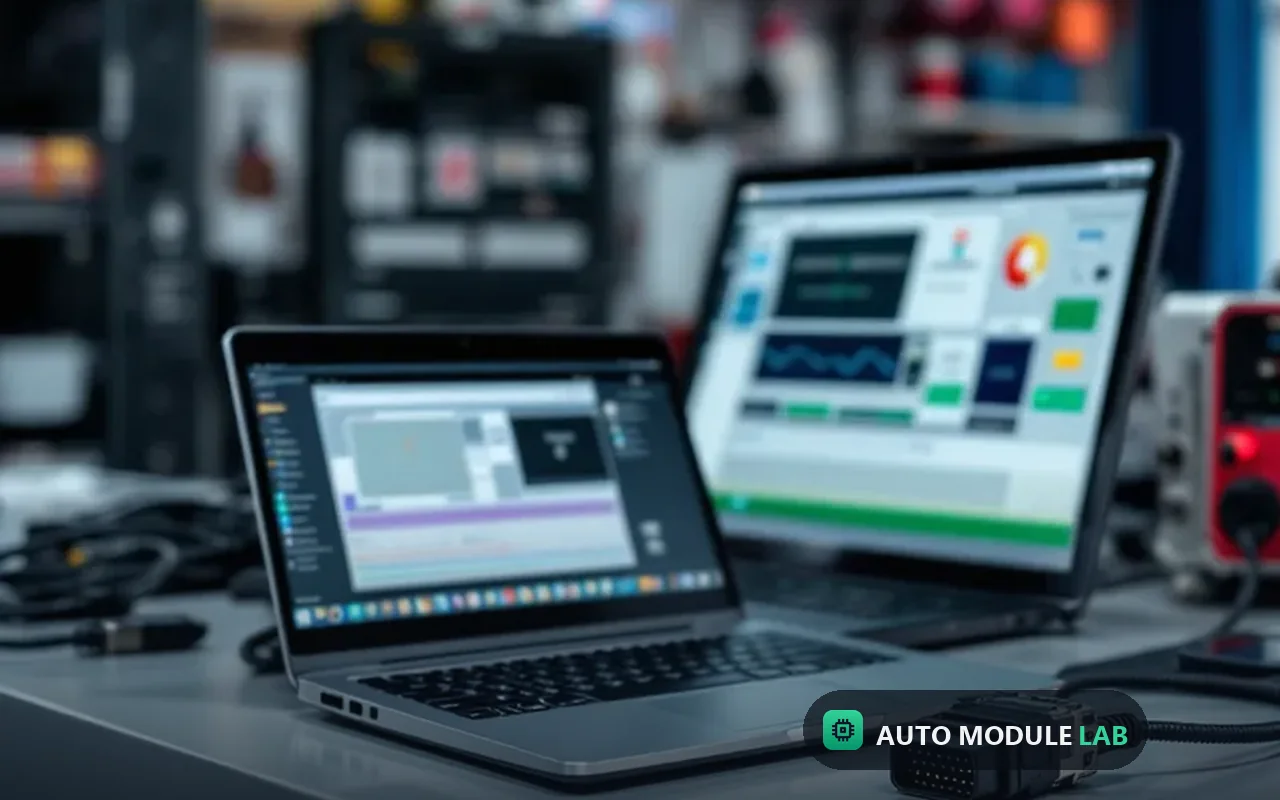
Ford & GM Stock OEM Re-Programming Back to Factory: 2026
Who this is for
You are in the right place if any of these match your situation:
- Your Ford or GM has a performance tune and you need to take it back to bone stock
- You are about to make a warranty claim and want the module reporting factory software
- You are selling the vehicle and the buyer, or you, want a clean stock calibration
- You are returning a lease and need the powertrain back to original spec
- You have an emissions or state safety inspection coming up and want the module to read stock
- A tune flash failed, corrupted, or left the module misbehaving, and you want a clean factory restore
- You bought a used vehicle that turned out to be tuned and you want to undo it
If you need a Ford or GM PCM, ECM, or TCM to read and behave as factory stock, an OEM reflash is the answer.
What a return-to-stock reflash actually is
Your engine, transmission, and powertrain control modules ship from the factory with a specific software calibration. That calibration is matched to your VIN, your engine, your transmission, and the emissions standard the vehicle was certified to. A tune replaces some or all of that calibration with modified values, things like fuel and spark tables, boost targets, rev limits, transmission shift logic, and torque management.
A return-to-stock reflash reverses that. We take the factory OEM calibration for your exact VIN and module, and we write it back over the tune. When we are done, the module holds the same software it had when it left the assembly line. It is not an approximation and it is not a generic file. It is the specific factory calibration your vehicle was built with.
This is a software operation. We are not replacing the PCM, ECM, or TCM hardware. We are restoring the program that runs on it.
Why it matters that the module reports as stock
This is the part that drives most orders. After the reflash, when a dealer technician connects a factory scan tool, or when an inspection station reads the module over OBD-II, the calibration ID and software the module reports back are the factory values. There is no tune signature for them to flag.
According to the EPA Automotive Trends Report, the industry has moved toward increasingly precise factory calibrations, and dealers and inspection programs are equipped to read what software a module is running. The factory calibration is also the reference point for safety and emissions work: when a manufacturer issues a software remedy, it is published through the NHTSA recalls system and applied as a specific VIN-matched calibration, the same kind of file a return-to-stock reflash restores. A tune that was fine on a track or a private build can become a problem at exactly the wrong moment, during a warranty visit, a lease return inspection, or a state emissions check. Putting the factory calibration back removes that exposure cleanly.
The U.S. EPA's air-enforcement program treats emissions tampering as a serious matter, which is one more reason a clean factory restore is the safe, correct state for a vehicle that is going back into normal service, being sold, or being inspected. The scale is not theoretical: under the EPA National Enforcement Initiative on aftermarket defeat devices, the agency finalized 172 civil enforcement cases carrying $55.5 million in civil penalties from FY2020 through FY2023. A return-to-stock reflash moves a vehicle in the opposite direction, away from any of that exposure and back to the calibration the EPA certified.
It is worth being precise about why this is legitimate work rather than tampering. Per the EPA Enforcement Policy on Vehicle and Engine Tampering, the agency exercises enforcement discretion for conduct that does not adversely affect emissions. Writing the factory OEM calibration back over a tune restores emissions controls rather than disabling them, which is exactly the direction that policy favors.
Ford, GM, and where Mopar fits
This $250 flat rate covers Ford and GM modules: PCM, ECM, and TCM. Both manufacturers use calibration systems we can restore to the VIN-matched factory file.
Mopar, meaning Chrysler, Dodge, Jeep, and Ram, is handled separately at $350. The reason is security, not difficulty for difficulty's sake. Mopar modules from the GPEC2 and GPEC2A era and related platforms use stronger security handling than the typical Ford or GM module, and that extra work is reflected in the price. If you have a Mopar vehicle, you want the dedicated Mopar service, not this one. We will point you there.
| Manufacturer | Modules covered | Flat rate |
|---|---|---|
| Ford | PCM, ECM, TCM | $250 |
| GM | PCM, ECM, TCM | $250 |
| Chrysler, Dodge, Jeep, Ram (Mopar) | Separate dedicated service | $350 |
Symptoms and reasons people reflash to stock
There is no fault light that says "this is tuned." The reasons people come to a stock reflash are situational, not diagnostic:
- A warranty claim is coming and the owner does not want the tune to complicate or void coverage
- The vehicle is being sold and a stock calibration is cleaner, simpler, and more honest for the next owner
- A lease is ending and the powertrain has to go back to original spec to avoid penalties
- An emissions or safety inspection is due and the module needs to read factory software
- A tune flash failed or corrupted, leaving rough running, limp mode, or odd shifting, and a clean factory restore is the fastest reset
- A used purchase turned out to be tuned and the new owner wants known-good factory behavior
- A modified vehicle is being returned to a daily-driver baseline before sale or handoff
A useful way to think about it: a tune changes how the vehicle behaves and what software it reports. A stock reflash undoes both, all the way back to factory.
What the reflash does
We bench-flash your PCM, ECM, or TCM with the factory OEM calibration that matches your VIN. After the flash:
- The module runs the original factory software, not the tune
- It reports as stock to dealer scan tools and over OBD-II
- Factory fueling, spark, boost, rev limits, transmission logic, and emissions behavior are all back to original
- Any drivability quirks introduced by the tune, or by a failed tune flash, are gone because the original calibration is back in place
What we do not change is the hardware. The module is the same physical unit, now running the software it shipped with.
The mail-in process, step by step
Order and pay. Choose the reflash on the Stock OEM re-programming service page and pay the flat $250 for Ford or GM.
Ship your module to:
Auto Module Lab, PO Box 120241, Arlington TX 76012 if you ship USPS — or 1009 Oakwood Ln # 120241, Arlington TX 76012 if you ship UPS or FedEx (UPS and FedEx cannot deliver to a PO Box).
Include your printed order, a note with your year, make, model, engine, transmission, and your full VIN, plus a contact number.
24-hour bench turnaround. Once the unit arrives, we flash it back to the VIN-matched factory calibration and verify, then ship back within one business day.
Flat-rate return shipping, chosen at checkout. Standard (3-5 business days) is $24.95, UPS 2nd Day Air is $54.95, and UPS Next Day Air is $94.95. Tracking provided either way.
Install. Reinstall the module. It now reads and runs as factory stock.
What to ship
- Your PCM, ECM, or TCM — the module currently carrying the tune.
- Your full VIN, written on the note. This is essential, because the factory calibration is matched to the VIN. Without it we cannot pull the correct stock file.
- Year, make, model, engine, and transmission, so we confirm the right module and calibration.
- A contact number, in case we see something unexpected on the bench.
If you have more than one module tuned, for example both the engine computer and the transmission computer, tell us, because each is a separate calibration.
What this service does NOT do
We keep the scope honest so you know exactly what you are getting:
- This is NOT a delete tune. We do not delete, disable, or alter catalytic-converter monitors, EGR, the evaporative system, oxygen-sensor or readiness monitors, or any emissions equipment. Per the U.S. EPA's air-enforcement prohibition on defeat devices, emissions tampering is illegal, and we do not do it. This service does the opposite of a delete: it restores the factory emissions calibration.
- It does not add power. Returning to stock removes the tune. If the tune added power, that power goes away, which is the entire point.
- It is not a hardware repair. If the module has a physical failure, a reflash will not fix it. We restore software.
- It does not cover Mopar at this price. Chrysler, Dodge, Jeep, and Ram have a separate dedicated service at $350.
- It does not undo mechanical modifications. Bolt-on hardware, intakes, and exhaust are physical changes. We restore the calibration; we do not touch parts.
- It does not guarantee a warranty outcome. It puts the module back to factory software, which is the cleanest state for a claim, but the manufacturer makes warranty decisions, not us.
Price vs the dealer
A dealer can often reflash a module to the latest factory calibration, but that path has friction. It usually requires an appointment, shop labor billed by the hour, and in many cases the dealer is reluctant to touch a vehicle they suspect has been tuned, or they may charge to investigate before they reflash.
Labor is the cost driver. Per the U.S. Bureau of Labor Statistics, automotive service technician labor is a significant and rising expense, and a dealer programming session plus diagnostic time adds up. A flat-rate bench reflash gives you a known price and a known result.
| Line item | Dealer | Auto Module Lab reflash |
|---|---|---|
| Diagnostic / investigation time | Often billable | Not needed |
| Programming labor | Hourly | Included in flat rate |
| Appointment wait | Days to weeks | Ship when ready |
| Result | Latest factory calibration | VIN-matched factory calibration |
| Turnaround | Appointment-dependent | 24-hour bench |
| Return shipping | n/a | Flat-rate from $24.95, chosen at checkout |
| Total | Variable | $250 (Ford / GM) |
A real-world example
An owner in Texas had a tuned half-ton GM truck and a warranty repair he needed done before the powertrain coverage lapsed. He knew the tune could complicate the claim, and he did not want to roll into the service drive with a non-stock calibration the dealer could read in thirty seconds.
He shipped the ECM to Arlington with his full VIN, year, model, engine, and transmission on a note. We pulled the factory calibration matched to his VIN, flashed it back over the tune, verified the module read stock, and shipped it back, most of the elapsed time being transit. He reinstalled it, the truck reported factory software on the dealer's tool, and the warranty visit went forward on a clean baseline. No emissions equipment was touched at any point, because returning to stock is the opposite of a delete.
What I tell customers
Returning to stock is the most honest thing you can do to a vehicle that is about to be sold, inspected, or claimed under warranty. We put the exact factory calibration back, matched to your VIN, so the module reads and runs the way it did off the line. I want to be very clear that this is not a delete and it never will be, we do not alter emissions equipment, we restore it. If you want power, this is the wrong service. If you want the truth, factory stock, this is exactly it. — Adrian Torres, Founder, Auto Module Lab
Bench techs who do this work for a living tend to put it in plainer terms:
"The customers who get burned are the ones who forget a tune is a permanent paper trail until the day a dealer plugs in. A VIN-matched factory flash is the only thing that makes the question go away cleanly. We are not hiding anything, we are putting back the exact file the manufacturer shipped, emissions controls and all." — Master automotive locksmith and ECU bench technician, 15+ years on the bench (anonymized)
I have run locksmith and module benches across Dallas, Houston, Austin, San Antonio, and Miami since 2012, and a mail-in stock reflash is the cleanest way to put a Ford or GM back to factory from anywhere in the country.
Frequently asked questions
Will the module really read as stock to a dealer? Yes. We write the VIN-matched factory OEM calibration back over the tune, so the software and calibration ID the module reports over OBD-II and to dealer scan tools are the factory values.
Why do you need my VIN? Because the factory calibration is matched to the VIN. The VIN tells us the exact stock file your vehicle was built with. Without it we cannot pull the correct calibration.
Is this a delete tune? No, it is the opposite. A delete removes emissions equipment from the calibration. This service restores the full factory calibration, including all emissions controls, exactly as the manufacturer shipped it.
Why is Mopar more expensive? Chrysler, Dodge, Jeep, and Ram modules use stronger security handling than typical Ford and GM modules, which is extra work, so Mopar is a separate dedicated service at $350.
Can you fix a failed or corrupted tune flash? Usually yes. A clean factory reflash is often the fastest way to recover a module left rough, in limp mode, or misbehaving after a tune flash went wrong.
Will returning to stock void or restore my warranty? We put the module back to factory software, which is the cleanest possible state for a warranty visit. The warranty decision itself belongs to the manufacturer, not to us.
I have both the engine and transmission computer tuned, can you do both? Yes. Each module is a separate calibration. Tell us which modules are tuned and ship them together with your VIN.
The bottom line
A return-to-stock reflash writes the factory OEM calibration, matched to your VIN, back over a tune so your Ford or GM PCM, ECM, or TCM reads and runs as factory stock, for warranty, resale, lease return, inspection, or failed-tune recovery. We restore software, not hardware, at a flat $250 for Ford and GM, with Mopar handled separately at $350. This is not a delete tune, and no emissions equipment is ever altered.
Start on the Stock OEM re-programming page, see the full mail-in process, or read about the shop on the Adrian Torres founder page. If you have a Mopar vehicle or you are unsure which module is tuned, send us your VIN and details first and we will confirm the right service before you ship.
Ship your module today
Flat-rate pricing, 24-hour bench turnaround, return speed your choice at checkout. Most jobs back on your bench within a week.
More from the Lab
Replaced a PCM or Module? Here's How to Program It Without the Dealer
10 min · August 23, 2026
Used ECM Programmed to Your VIN vs a New Dealer ECM: Real 2026 Cost Math (GM, Ford, Chrysler)
14 min · August 4, 2026
Remote GM Module Programming — SPS2 Without the Dealer Trip
8 min · August 23, 2026
Remote Ford Module Programming — PMI & FDRS Without the Dealer
8 min · August 23, 2026