
MINI CAS FRM3 DME Clone R55-R61 & F-Series: Mail-In 2026
Who this is for
You are in the right place if any of these fit your MINI:
- Your windows, turn signals, lighting, and wipers all quit at once, the classic FRM3 corruption
- Your MINI will not start or will not recognize keys after a CAS failure or a no-crank fault
- You replaced a CAS, FRM3, or DME with a used module and the car will not accept it
- You have a good used donor and a dead original and you need them married so the car runs
- You want to avoid a dealer ISTA programming appointment and the bill that comes with it
- You own an R55 Clubman, R56 Hatch, R57, R58, R59, R60 Countryman, R61 Paceman, or an F54-F60 MINI with a module fault
If the problem is a failed access, footwell, or engine module rather than wiring or a mechanical fault, a 1:1 clone onto a matched donor is the clean fix.
Why MINI cloning works, the BMW connection
MINI has been a BMW brand since 2001, and the modern cars share BMW's electrical architecture and module platforms. That matters for repair, because the same module families and the same cloning techniques that apply to BMW apply to MINI. The CAS, the FRM3, and the DME in your MINI are close cousins of the units in contemporary BMWs, and they respond to the same bench approach.
The dealer path to replacing one of these modules is ISTA programming and coding, where a new or used module is brought into the car's context and configured to the VIN, keys, and options. That requires dealer-level tooling, a network connection, and time, and a used module that has not been processed this way will not simply work.
The clone sidesteps all of it. Instead of programming a foreign module into your car, we copy your original module whole onto a matched donor, so the donor becomes a functional twin of the unit your car already trusts. It installs plug-and-play with no dealer ISTA.
CAS, FRM3, and DME, which one is yours
| Module | Role | What its failure looks like |
|---|---|---|
| CAS (Car Access System) | Immobilizer and key access | No-start, keys not recognized, security faults |
| FRM3 (footwell module) | Lighting, turn signals, windows, wipers | Several of those systems dead at once |
| DME | Engine computer, locked to CAS | No-start, immobilizer mismatch, engine faults |
CAS, the Car Access System, is the immobilizer and key-access brain. It holds the keys and the rolling security data and authorizes starting. When CAS fails or corrupts, the car will not start and may not recognize keys. That immobilizer function is also the car's main theft defense: the Insurance Institute for Highway Safety has shown that electronic immobilization cuts whole-vehicle theft dramatically, which is precisely why a used CAS cannot simply be dropped in without being matched to the car.
FRM3, the footwell module, controls a cluster of body functions: exterior and interior lighting, turn signals, power windows, and wipers. Its signature failure is corruption that takes all of those systems down together, so an owner suddenly has no turn signals, dead windows, wonky lighting, and inoperative wipers all at once. That simultaneous, multi-system failure is the giveaway that the footwell module, not four separate circuits, is at fault.
The DME is the engine computer, and on these cars it is paired to the CAS for immobilizer security. A DME problem can present as a no-start or an immobilizer mismatch, and a DME swap without the matching CAS relationship will not run.
In all three cases, the donor must be the same generation as your original. A clone is a one-to-one copy onto matched hardware, and a wrong-generation donor will not produce a working module.
Generations we cover
The clone covers the R-series and the F-series MINI:
- R55 Clubman
- R56 Hatch
- R57 Convertible
- R58 Coupe
- R59 Roadster
- R60 Countryman
- R61 Paceman
- F54 Clubman, F55 and F56 Hatch, F57 Convertible, F60 Countryman, and the related F-series cars
The donor you supply must match your original's generation and module family. Send us your VIN and the part number off the module and we will confirm the match before you commit.
Symptoms and failure modes
According to the NHTSA complaint and recall database, MINI owners report electrical and module-level faults consistent with CAS, footwell, and DME failures. The patterns that bring people to a clone:
- All of the FRM3 systems dead at once — no turn signals, dead windows, erratic or dead lighting, and inoperative wipers, simultaneously
- Crank-no-start with keys not recognized, the CAS immobilizer signature
- A no-start after a used CAS or DME swap where the donor was never programmed to the car
- Immobilizer mismatch faults after a module change, because the security relationship does not match
- Intermittent or total loss of a body-electrical cluster that points at the footwell module rather than any single circuit
- A failed dealer-style programming attempt on a used module that the car refused
A practical screen: if several FRM3-governed systems failed at the same moment, suspect the footwell module. If the car cranks but will not start and keys are not recognized, suspect CAS. If the symptoms are clearly engine-side with an immobilizer flavor, suspect the DME. When in doubt, send the VIN and the part number and we will help you narrow it.
What the clone does
We read your original module in full — CAS, FRM3, or DME — capturing the complete memory: the VIN, the key data and coding for CAS, the configuration and coding for FRM3, or the calibration and security pairing for the DME. We then write that full image onto a part-matched donor of the same generation. The donor becomes a one-to-one twin of your original.
Because the clone carries your VIN, your keys, and your coding, the installed module is plug-and-play with no dealer ISTA programming. From the car's perspective, it is the same module it already trusted.
Immobilizer and key work like this runs through a recognized industry framework. Per the National Automotive Service Task Force (NASTF) Vehicle Security Professional registry, security-sensitive functions such as key and immobilizer programming are released only through its Secure Data Release Model, which verifies the legitimacy of the request first. Cloning your own car's CAS, FRM3, or DME identity at your request is the legitimate-repair case that framework is designed to serve.
The mail-in process, step by step
Order and pay. Choose the clone on the MINI CAS / FRM3 / DME clone service page and pay the flat $250.
Ship your original module and a matched donor to:
Auto Module Lab, PO Box 120241, Arlington TX 76012 if you ship USPS — or 1009 Oakwood Ln # 120241, Arlington TX 76012 if you ship UPS or FedEx (UPS and FedEx cannot deliver to a PO Box).
Include your printed order, a note with your VIN and which module it is, and a contact number.
24-hour bench turnaround. Once both units arrive, we clone and verify, then ship back within one business day.
Flat-rate return shipping, chosen at checkout. Standard (3-5 business days) is $24.95, UPS 2nd Day Air is $54.95, and UPS Next Day Air is $94.95. Tracking provided either way.
Install and drive. Fit the cloned module and start the car or restore the affected systems. No ISTA, no relearn.
What to ship
- Your original module — the source of the clone. If it is too damaged to read, message us first; some failures are recoverable and some are not.
- A same-generation, part-matched donor module — must match your original's generation and module family. We can confirm the match from your VIN and part number.
- Your VIN and the module type (CAS, FRM3, or DME), written on the note.
- A contact number, in case we see something unexpected on the bench.
For a CAS clone you generally do not need to ship keys, since the key data is read from the original module memory, but tell us your situation and we will advise.
What this service does NOT do
We keep the scope honest so you do not pay for the wrong thing:
- It is not a tune. A DME clone is an exact copy of your existing calibration. We do not raise power, change fueling or spark, or remove limiters.
- It is NOT an emissions change. We do not delete, disable, or alter any emissions system. Per the U.S. EPA's air-enforcement prohibition on defeat devices, emissions tampering is illegal, and a clone runs the same emissions calibration your car already had.
- It cannot revive dead donor hardware. A faulty donor will not be fixed by cloning. The donor must be healthy.
- It will not read a destroyed original. If your original module's memory is physically gone, there may be nothing to clone; message us about your specific failure.
- The donor must match generation. A wrong-generation or wrong-family donor will not produce a working clone, which is why we verify first.
- It does not fix wiring or mechanical faults. Chewed harnesses, blown motors, and mechanical problems are separate from module identity and coding.
Price vs the dealer
A dealer module job on a MINI stacks up fast: a new or dealer-supplied module, ISTA programming and coding to the VIN, key and security setup for CAS work, and the appointment time to do it. For CAS and DME work the immobilizer setup adds labor, and a non-starting car often needs a tow to the dealer to begin with.
Labor and tooling are the cost drivers. Per the U.S. Bureau of Labor Statistics, automotive service technician labor is a real and rising expense, and dealer programming hours are billed at a premium. A clone replaces the new-part purchase and the on-vehicle programming with a single bench operation and a used donor you source.
| Line item | MINI dealer | Auto Module Lab clone |
|---|---|---|
| Module | New or dealer-supplied | Used same-generation donor (you source) |
| Programming / coding | ISTA, VIN, keys, options | Included in clone |
| Key / immobilizer setup | Extra labor on CAS / DME | Carried in the clone |
| Tow (non-starting car) | Often required | Not needed for the clone |
| Turnaround | Appointment-dependent | 24-hour bench |
| Return shipping | n/a | Flat-rate from $24.95, chosen at checkout |
| Programming total | Steep, dealer-rate | $250 |
A real-world example
A MINI owner in the Southeast drove an R56 that one morning had no turn signals, dead front windows, flickering lights, and wipers that would not run, all at once. A general shop chased individual circuits for hours before recognizing the simultaneous, multi-system failure as FRM3 corruption.
The owner sourced a used FRM3 from a same-generation R56 and shipped both the original and the donor to Arlington with the VIN on a note. We read the original module's full memory, cloned it onto the donor, verified the write, and shipped it back, most of the elapsed time being transit. The cloned FRM3 went in plug-and-play, and the signals, windows, lighting, and wipers all came back with no dealer ISTA appointment and no per-system diagnosis.
What I tell customers
MINI is BMW under the skin, which is good news when a module dies, because we can clone it instead of programming a stranger into your car. We copy your real VIN, your keys, and your coding onto a matched donor of the same generation, and it goes in plug-and-play with no dealer ISTA. The FRM3 in particular fools people, because it kills several systems at once and looks like a wiring nightmare. It is usually just the module, and a clone fixes it. This is identity and coding only, not a tune and not a delete. — Adrian Torres, Founder, Auto Module Lab
Bench technicians who run these modules daily describe the same pattern:
"The FRM3 is the one that burns hours in a general shop, because the failure looks like five separate electrical problems instead of one dead module. Once you have seen a corrupted footwell module a few times, the simultaneous loss of signals, windows, lights, and wipers is a fingerprint. Clone the original onto a same-generation donor and it all comes back at once, no per-circuit chase, no dealer programming appointment." — Master automotive locksmith, 15+ years on the bench (anonymized)
I have run locksmith and module benches across Dallas, Houston, Austin, San Antonio, and Miami since 2012, and a mail-in clone is the cleanest way to fix a MINI module for an owner or a shop anywhere in the country.
Frequently asked questions
Why can I clone a MINI module instead of programming a used one? MINI uses BMW architecture, and a used module needs dealer ISTA programming to work in your car. Cloning copies your original's full memory onto a matched donor, so the donor is a twin of the unit your car already trusts and installs plug-and-play.
Do you need both my original module and a donor? Yes. We read the full memory from your original and write it onto the same-generation donor. Both must come to the bench.
Will I need dealer ISTA programming after install? No. The clone carries your VIN, keys, and coding, so it is plug-and-play with no dealer programming or relearn.
Does the donor have to be the same generation? Yes. A clone is a one-to-one copy onto matched hardware. A wrong-generation or wrong-family donor will not produce a working module, which is why we confirm the match first.
My FRM3 killed my windows, signals, lights, and wipers, can you fix it? That simultaneous multi-system failure is the classic FRM3 corruption signature. A clone onto a matched donor restores all of those systems together.
Is a DME clone a tune? No. It is an exact copy of your existing calibration. We do not change performance and we do not touch emissions controls.
Which MINIs do you cover? R55 Clubman through R61 Paceman and the F54-F60 cars. Send your VIN and the module part number and we will confirm your generation before you ship.
The bottom line
MINI runs BMW architecture, so a failed CAS, FRM3, or DME can be cloned 1:1 onto a same-generation donor with your VIN, keys, and coding preserved, plug-and-play, with no dealer ISTA. CAS is the immobilizer and access brain, FRM3 runs lighting, signals, windows, and wipers and kills them together when it corrupts, and the DME is the engine computer paired to your CAS. We cover R55 Clubman through R61 Paceman and the F-series, and the donor must match the generation. This is an identity and coding clone only, not a tune and not an emissions change.
Start on the MINI CAS / FRM3 / DME clone page, see the full mail-in process, or read about the shop on the Adrian Torres founder page. If you are not sure which module failed or whether your donor matches, send us your VIN and the part number first and we will confirm the clone before you ship.
Ship your module today
Flat-rate pricing, 24-hour bench turnaround, return speed your choice at checkout. Most jobs back on your bench within a week.
More from the Lab
BMW Module Repair vs Replacement: FRM, CAS, FEM/BDC, DME, EWS and ELV Compared
15 min · July 26, 2026
BMW Key & Module Programming by Chassis: CAS, FEM/BDC, DME, FRM Explained (E, F, G Series)
12 min · July 10, 2026
BMW CAS Clone & Repair Mail-In 2004-2016: Guide 2026
12 min · June 18, 2026
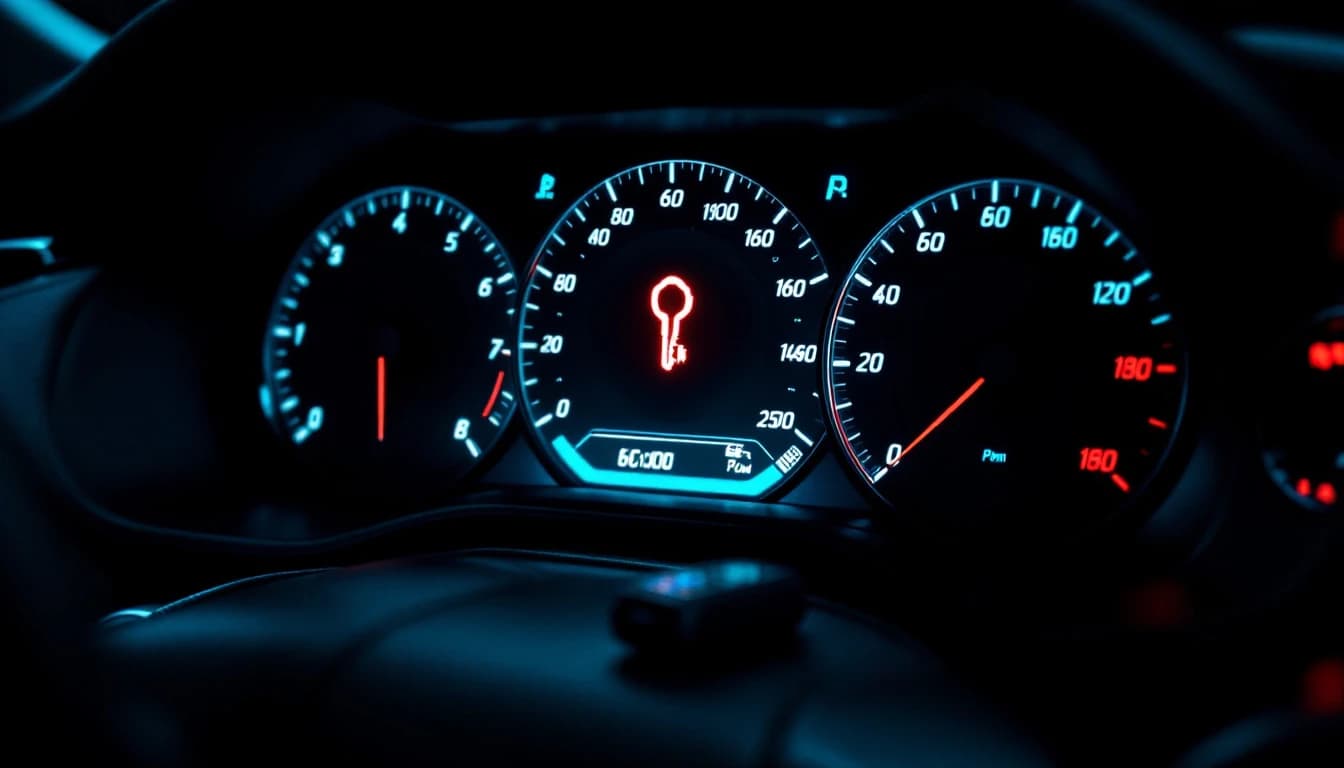
BMW Key Not Detected, No Crank: The CAS-Era Diagnosis Ladder Before You Replace Anything
11 min · July 29, 2026